


Gathivan (Polygonum aviculare) – Properties, Indications, Composition & Dosage
Abstract
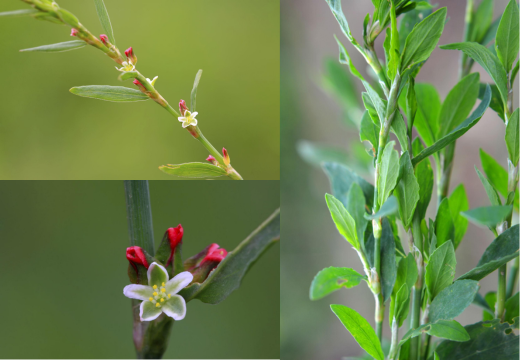
Gathivan, commonly known as Kesri or Common Knot Grass (Polygonum aviculare), is a widely distributed medicinal herb belonging to the Polygonaceae family. It is a low-growing plant with thin branching stems, small leaves, and tiny pinkish or whitish flowers that commonly grow in open fields, roadsides, and uncultivated lands. In traditional herbal practices, this plant is valued for its cooling, astringent, and cleansing properties, which make it beneficial in managing various disorders related to digestion, urinary health, and skin conditions. Different parts of the plant, especially the aerial portions, have been traditionally used to help control diarrhoea, reduce excessive discharges, and support wound healing. The presence of natural compounds such as tannins and flavonoids contributes to its protective and restorative effects. Due to its wide availability and therapeutic usefulness, Gathivan continues to hold importance in traditional medicine and natural healing practices.
Classical Reference Of Gathivan (Polygonum Aviculare)
Bhavprakash Nighantu Karpooradi Varga Page No. 241
Scientific Classification Of Gathivan (Polygonum Aviculare)
- Kingdom: Plantae
- Subkingdom: Tracheobionta (Vascular plants)
- Superdivision: Spermatophyta (Seed-producing plants)
- Division: Magnoliophyta (Flowering plants)
- Class: Magnoliopsida (Dicotyledons)
- Subclass: Caryophyllidae
- Order: Caryophyllales
- Family: Polygonaceae
- Genus: Polygonum
- Species: Polygonum aviculare
Synonyms Of Gathivan (Polygonum Aviculare)
- Granthiparnam: Having leaves with knots or distinct nodes.
- Granthik: Knotty or jointed, referring to the stem or seed pods.
- Kakpuccha: Resembling a crow’s tail, describing the shape of the leaves.
- Gushak: Growing in clusters or bunches.
- Nilapushpa: Having blue-colored flowers.
- Sugandham: Possessing a pleasant and strong fragrance.
- Tailaparnakam: The “oil-leaf plant,” referring to the essential oil content present in the leaves.
Vernacular Names Of Gathivan (Polygonum Aviculare)
- Sanskrit: Kshudra Parpat, Parpatak
- Hindi: Gathivan, Chhoti Parpat, Kesri
- English: Common Knot Grass, Knotweed
- Punjabi: Gathiya Booti
- Gujarati: Nani Parpati
- Marathi: Choti Parpati
- Bengali: Kshudra Parpat
- Tamil: Siru Parpata
- Telugu: Chinna Parpatakam
- Malayalam: Cheru Parpataka
Habitat Of Gathivan (Polygonum Aviculare)
Natural Habitat and Growth Environment
Gathivan (Polygonum aviculare), commonly known as common knot grass, is a highly adaptable herb that naturally grows in open and disturbed environments. It is frequently found along roadsides, footpaths, agricultural lands, and uncultivated areas where the soil is often compact and low in fertility. The plant grows close to the ground in a mat-like form, helping it withstand frequent trampling and physical disturbance.
Soil Adaptability
One of the most notable characteristics of Gathivan is its ability to thrive in a wide range of soil types. It grows well in hard, compact soils with poor aeration, as well as in sandy, dry, and gravelly terrains. Its strong root system enables efficient nutrient and moisture absorption, allowing it to survive in nutrient-deficient conditions where many other plants struggle to grow.
Climatic Conditions
Gathivan is well adapted to temperate and subtropical climates. It performs well in regions with moderate temperatures and exhibits strong tolerance to dry conditions. Even with limited rainfall, the plant can survive and complete its life cycle. It can also adapt to moderately moist environments, making it suitable for a variety of climatic zones.
Geographical Distribution
This herb has a wide cosmopolitan distribution and is found across many regions of the world. It is commonly observed throughout India and is also widely distributed in Europe, Asia, and North America. Its seeds spread efficiently through wind, water, animals, and human activities, contributing to its extensive geographical presence.
Ecological Significance
Although often regarded as a weed, Gathivan plays an important ecological role. Its spreading growth habit helps reduce soil erosion and serves as an effective natural ground cover. It contributes to soil stability and provides habitat and support for small organisms, thereby helping maintain local biodiversity.
Adaptation to Disturbed Environments
Gathivan demonstrates remarkable resilience in human-disturbed habitats. It commonly grows along walking paths, roadside margins, and construction sites. Its low-growing structure helps it withstand mowing, grazing, and other physical disturbances, allowing it to persist under challenging environmental conditions.
Seasonal Growth Pattern
Gathivan is generally an annual plant that grows actively during the warmer months of the year. It typically germinates in spring or early summer, grows vigorously throughout the season, and produces flowers and seeds by late summer or autumn. The seeds remain viable in the soil for extended periods, ensuring successful regeneration in subsequent growing seasons.
Morphology Of Gathivan (Polygonum Aviculare)
General Appearance
Gathivan (Polygonum aviculare), commonly known as common knot grass, is a small, prostrate, and spreading herb that forms dense mats close to the ground. It is a hardy annual plant with a low-growing habit, allowing it to thrive in compact and disturbed soils. Despite its delicate appearance, the plant is highly resilient to environmental stresses such as trampling and drought.
Stem
The stem is slender, wiry, and extensively branched. It grows horizontally along the ground and may slightly ascend at the tips. The stems are smooth, green to reddish in color, and divided into distinct nodes and internodes. These nodes give the plant its characteristic “knotty” appearance, which is reflected in its common name, knot grass.
Leaves
The leaves are small, simple, and alternately arranged along the stem. They are narrow, oblong to lance-shaped, and possess smooth margins. The leaf surface is generally green, sometimes appearing bluish-green under certain conditions. A thin membranous sheath known as an ochrea is present at the base of each leaf, a distinctive characteristic of the Polygonaceae family.
Flowers
The flowers are very small, inconspicuous, and usually occur in clusters at the leaf axils. They are typically pinkish, greenish, or whitish in color. Each flower has a simple structure without showy petals and is adapted for both self-pollination and pollination by small insects.
Fruits
The fruit is a small, dry, triangular achene enclosed within the persistent floral parts. When mature, it becomes dark brown to black in color and has a smooth, shiny surface containing a single seed.
Seeds
The seeds are tiny, hard, and highly viable. They can remain dormant in the soil for extended periods and germinate when environmental conditions become favorable, contributing to the plant’s widespread distribution and persistence.
Root System
Gathivan possesses a well-developed taproot system with numerous fine lateral roots. This root structure enables efficient absorption of moisture and nutrients while helping the plant thrive in compact and nutrient-poor soils.
Classical Categorisation Of Gathivan (Polygonum Aviculare)
- Bhavprakash Nighantu: Karpooradi Varga
Ancient Verses For Gathivan (Polygonum Aviculare)
Verse No. 1
ग्रन्थिपर्णं ग्रन्थिकञ्च काकपुच्छञ्च गुच्छकम् ।
नीलपुष्पं सुगन्धञ्च कथितं तैलपर्णकम् ॥Bhavprakash Nighantu Karpooradi Varga Verse No. 107
Verse Interpretation
Synonyms of Gathivan
- Granthiparnam: Having leaves with knots or distinct nodes.
- Granthik: Knotty or jointed, referring to the stem or seed pods.
- Kakpuccha: Resembling a crow’s tail, describing the shape of the leaves.
- Gushak: Growing in clusters or bunches.
- Nilapushpa: Bearing blue-colored flowers.
- Sugandham: Possessing a pleasant and strong fragrance.
- Tailaparnakam: The “oil-leaf” plant, referring to the presence of aromatic essential oils in the leaves.
Verse No. 2
ग्रन्थिपर्णं तिक्ततीक्ष्णं कटूष्णं दीपनं लघु ।
कफवातविषश्वासकण्डूदौर्गन्ध्यनाशनम् ॥Bhavprakash Nighantu Karpooradi Varga Verse No. 108
Verse Interpretation
Qualities of Gathivan
Gathivan is characterized by its bitter and pungent tastes. This herb is described as being sharp in nature, light to digest, and possessing a hot potency that helps stimulate the digestive fire. Medicinally, it is utilized to alleviate imbalances in the Kapha and Vata doshas. Furthermore, it is recognized for its ability to treat various conditions, including toxins, breathing disorders or asthma, itching, and foul body odor.
Ayurvedic Properties Of Gathivan (Polygonum Aviculare)
- Rasa (Taste): Tikta (bitter) and Katu (pungent).
- Virya (Potency): Ushna (hot), indicating a warming effect on the body.
- Guna (Qualities): Teekshna (sharp) and Laghu (light to digest), which support efficient digestion and metabolism.
- Vipaka (Post-Digestive Effect): Katu (pungent), reflecting its influence on the body after digestion.
Action On Tridosha Of Gathivan (Polygonum Aviculare)
Effective in reducing Vata and Kapha imbalance.
Therapeutic Indications Of Gathivan (Polygonum Aviculare)
- Kidney Stones
- Difficulty in Urination
- Chronic Diarrhea
- Intermittent Fever
- Lung Disorders
- Bronchitis
- Whooping Cough
- Erysipelas (Skin Disease)
- Bladder Pain
Systemic Actions Of Gathivan (Polygonum Aviculare)
- Urinary System: It acts as a diuretic, helps in breaking or removing stones, and assists in the downward movement of suppressed urine.
- Digestive System: It helps in blood clotting and reducing excessive secretions. It is commonly used in cases of chronic diarrhea and abdominal discomfort associated with mucus accumulation or amoebiasis.
- Respiratory System: It is used to support respiratory health, particularly in conditions such as bronchitis and whooping cough. It also acts as an expectorant, helping to loosen and expel excess phlegm from the respiratory tract.
- Thermoregulation: It possesses antipyretic properties, making it beneficial in managing fevers, especially intermittent fevers.
Chemical Composition Of Gathivan (Polygonum Aviculare)
Phenolic Compounds
Gathivan is particularly rich in phenolic compounds, which are among the most important contributors to its therapeutic activity. These include compounds such as gallic acid, caffeic acid, and related derivatives. Phenolic compounds are well known for their strong antioxidant properties, which help neutralize free radicals and reduce oxidative stress in the body. By protecting cellular structures, these compounds play a significant role in preventing tissue damage, supporting immune defense, and slowing down degenerative changes.
Flavonoids
Flavonoids form a major class of bioactive constituents in Polygonum aviculare. These include quercetin derivatives, avicularin, myricetin-based compounds, and other flavonoid glycosides. Flavonoids are known for their wide range of biological activities, including antioxidant, anti-inflammatory, and vascular-protective effects. They help strengthen capillaries, improve circulation, and reduce inflammation at the cellular level. Their presence also supports the plant’s traditional use in managing bleeding disorders and inflammatory conditions.
Tannins
Tannins are present in significant amounts and are responsible for the strong astringent (Kashaya) property of Gathivan. These compounds have the ability to precipitate proteins, leading to tissue contraction and reduced secretions. This explains their effectiveness in managing diarrhoea, dysentery, and minor bleeding conditions. Tannins also exhibit antimicrobial properties, which help protect wounds from infection and promote faster healing.
Saponins and Glycosides
Gathivan contains saponins and various glycosidic compounds that contribute to its diuretic and cleansing effects. Saponins are known to enhance membrane permeability and support the elimination of metabolic waste products. Glycosides present in the plant may influence physiological functions such as fluid balance and detoxification. These compounds play a supportive role in maintaining kidney health and promoting urinary excretion.
Coumarins and Anthraquinone Derivatives
The plant also contains small amounts of coumarins and anthraquinone derivatives. Coumarins are known for their anti-inflammatory and mild anticoagulant properties, which may support circulation and reduce inflammation. Anthraquinone derivatives, although present in lower concentrations, may contribute to mild laxative effects, helping regulate bowel movements and support digestive health.
Vitamins and Nutritional Components
Gathivan provides certain essential nutrients, including vitamin C and carotenoids (pro-vitamin A compounds). These nutrients contribute to its antioxidant potential and help support immune function, skin health, and tissue repair. Although present in moderate amounts, these nutritional components enhance the overall therapeutic value of the plant.
Silica and Mineral Content
One of the notable constituents of Gathivan is silicic acid (silica), which plays an important role in maintaining the structural integrity of connective tissues. Silica is essential for healthy skin, hair, nails, and bones. It also supports wound healing by strengthening tissue structure and promoting regeneration. In addition, the plant contains trace minerals that contribute to its overall nutritive profile.
Alkaloids and Essential Oils
Trace amounts of alkaloids and essential oils have also been identified in Polygonum aviculare. Alkaloids may contribute to certain pharmacological actions, including antimicrobial and protective effects. Essential oils, although present in small quantities, may provide mild soothing and anti-inflammatory benefits.
Mucilage and Other Compounds
The presence of mucilage adds to the soothing and protective properties of the plant, particularly in gastrointestinal and urinary tract conditions. Mucilage forms a protective layer over irritated tissues, reducing inflammation and promoting healing. Additional minor constituents such as lignans and simple sugars also contribute to the plant’s overall biological activity.
Practical Uses / Health Benefits Of Gathivan (Polygonum Aviculare)
Supports Urinary Health
Gathivan is widely used for maintaining urinary system health. Its natural diuretic property helps increase urine flow, which assists in flushing out toxins and small kidney stones. It is especially useful in relieving burning sensation and difficulty during urination.
Helpful in Kidney Stones
Due to its stone-breaking and cleansing action, Gathivan is traditionally used in the management of renal calculi. It helps in reducing stone formation and supports their gradual elimination through urine.
Controls Chronic Diarrhoea
The absorbent nature of Gathivan makes it effective in controlling chronic diarrhoea. It helps reduce excessive intestinal secretions, improves bowel consistency, and supports the healing of the intestinal lining.
Supports Respiratory Health
Gathivan is beneficial in managing respiratory conditions such as bronchitis and whooping cough. It acts as an expectorant, helping to remove excess mucus from the lungs and ease breathing.
Reduces Fever
The herb possesses antipyretic properties, which help in reducing fever, especially intermittent fever. It supports the body in regulating temperature and improving recovery.
Helps in Bleeding Disorders
With its strong astringent action, Gathivan helps control minor bleeding conditions. It supports blood clotting and reduces excessive discharges from the body.
Promotes Skin Healing
Gathivan is useful in managing skin conditions such as erysipelas and minor infections. Its antimicrobial and healing properties help reduce inflammation and promote faster recovery of the skin.
Relieves Bladder Pain
The soothing and anti-inflammatory effects of Gathivan help in reducing irritation and pain in the bladder, making it beneficial in urinary discomfort.
Supports Detoxification
Gathivan helps in cleansing the body by promoting proper elimination of waste products through urine and stool. This detoxifying effect supports overall health and internal balance.
Balances Doshas
From an Ayurvedic perspective, Gathivan helps in balancing Vata and Kapha doshas. This contributes to improved digestion, reduced mucus accumulation, and better systemic functioning.
Part(S) Used Of Gathivan (Polygonum Aviculare)
- Whole Plant
Dosage Of Gathivan (Polygonum Aviculare)
- Powder (Churna): 1–3 grams, taken once or twice daily with lukewarm water
- Decoction (Kwath): 20–40 ml, prepared from the dried herb, taken once or twice daily
- Fresh Juice (Swarasa): 10–20 ml, taken once or twice daily
Home Remedies Of Gathivan (Polygonum Aviculare)
- The root is used as a haemostatic (stops bleeding), diuretic, anti-calculi (helps in kidney stones), mild laxative, antipyretic (reduces fever), and expectorant. Seeds are also diuretic and emetic (induce vomiting).
- In kidney stones (Ashmari) and urinary disorders, decoction of the whole plant (Panchanga) or fresh root juice is used in higher quantity for better results.
- In chronic diarrhoea (Jeerna Atisara), root juice or juice of the whole plant is administered.
- In intermittent fever (Visham Jwara), root juice is used.
- In lung disorders, especially bronchitis and whooping cough, decoction of the whole plant is given.
- Paste of dried root applied externally helps in reducing pain.
- Leaf paste is applied in herpes, bladder pain, and abdominal discomfort for relief.
Research On Gathivan (Polygonum Aviculare)
Antioxidant Potential
Scientific investigations have shown that Polygonum aviculare contains a high amount of polyphenols and flavonoids, which play an important role in reducing oxidative stress. These compounds help protect cells from damage caused by free radicals and support overall tissue health. Laboratory studies confirm that extracts of the plant exhibit strong antioxidant activity.
Anti-inflammatory Activity
Research findings indicate that Gathivan possesses significant anti-inflammatory effects. Its bioactive compounds help reduce the production of inflammatory mediators in the body. This supports its traditional use in conditions associated with swelling, irritation, and tissue inflammation.
Antimicrobial and Healing Properties
Studies suggest that the plant has the ability to inhibit the growth of certain microorganisms. Along with this, it also promotes wound healing by supporting tissue repair and regeneration. These findings align with its traditional use in managing skin infections and wounds.
Respiratory Benefits
Experimental research has indicated that compounds present in Polygonum aviculare may help relax airway muscles, thereby improving breathing. This supports its use in respiratory conditions such as cough, bronchitis, and other lung-related disorders.
Gastroprotective Effects
Some studies have demonstrated that the plant may help protect the stomach lining from damage. Its antioxidant and anti-inflammatory actions contribute to reducing irritation in the gastrointestinal tract, supporting its use in digestive disorders.
Cardiovascular Support
Research on animal models suggests that Gathivan may have a beneficial effect on heart health. It has been observed to help regulate lipid levels and reduce factors associated with cardiovascular risk, although more human studies are needed.
Metabolic and Weight Management Effects
Certain compounds found in the plant have shown the ability to influence fat metabolism by affecting digestive enzymes. This indicates a potential supportive role in managing body weight and metabolic balance.
Neuroprotective Potential
Due to its antioxidant properties, Polygonum aviculare is also being explored for its protective effects on the nervous system. It may help reduce oxidative damage in brain cells and support cognitive health.
Conclusion
Gathivan (Polygonum aviculare) is a valuable medicinal herb with wide applications in traditional and modern healthcare. Its astringent, diuretic, anti-inflammatory, and antioxidant properties make it beneficial for managing digestive, urinary, respiratory, and skin-related conditions. Classical Ayurvedic texts highlight its role in balancing Vata and Kapha doshas, improving digestion, and supporting detoxification. Modern research further supports its pharmacological potential, especially in oxidative stress, inflammation, and microbial infections. The presence of bioactive compounds like flavonoids, tannins, and phenolic acids contributes to its therapeutic effectiveness. Overall, Gathivan stands as a simple yet powerful herb that promotes natural healing and systemic balance when used appropriately as part of a holistic health approach.