


Kuchla / Kupilu / Nux-vomica Tree – Properties, Varieties, Composition & Dosages
Abstract
Vishamusthi (Strychnos nux-vomica Linn.), a medicinal plant classified under the Upavisha (semi-poisonous) group in the Ayurvedic Pharmacopoeia of India, is an important therapeutic herb used after proper purification (Shodhana). It belongs to the family Loganiaceae, and it is a medium-sized deciduous tree widely distributed across tropical regions of India and Southeast Asia. The dried seeds, commonly known as nux vomica, have been utilised for centuries in traditional systems of medicine, including Ayurveda and Chinese medicine. The plant is non-edible in its raw form due to the presence of toxic alkaloids such as strychnine and brucine, which require careful processing before medicinal use. In Ayurveda, Vishamusthi—also known as Kuchla, Kupilu, or Kanjiram—is valued for its therapeutic action in conditions like nervous debility, paralysis, limb weakness, digestive disorders, dysentery, chronic rheumatism, and sexual weakness. Properly processed seeds are considered a potent Rasayana, supporting neuromuscular strength and vitality, particularly in age-related degenerative conditions.
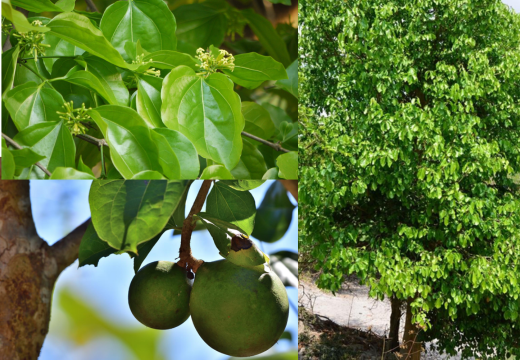
Classical references of Strychnos nux-vomica Linn./ Nux-vomica Tree/ Poison-Nut Tree/ Kuchla/ Kupilu
- Bhavprakash Nighantu Amradi Phala varga
- Raj Nighantu Prabhadradi varga
Scientific Classification of Strychnos nux-vomica Linn./ Nux-vomica Tree/ Poison-Nut Tree/ Kuchla/ Kupilu
- Kingdom: Plantae
- Division: Magnoliophyta
- Class: Magnoliopsida
- Order: Gentianales
- Family: Loganiaceae
- Genus: Strychnos
- Species: Strychnos nux-vomica Linn.
Synonym of Strychnos nux-vomica Linn./ Nux-vomica Tree/ Poison-Nut Tree/ Kuchla/ Kupilu
- Kupilu – Derived from Kutsitaha Peelu, meaning its fruit resembles Pilu (Salvadora oleoides / Salvadora persica), but is considered inferior due to its poisonous nature.
- Vishatinduka – The fruit resembles Tinduka (Diospyros tomentosa), but possesses toxic properties, hence the prefix Visha (poisonous).
- Kaka Tinduka – Refers to the plant commonly found in forest regions with fruits similar in appearance to Tinduka.
- Kaka Piluka – Indicates resemblance of its fruit to Pilu, though differing in medicinal quality and toxicity.
- Garadruma – Literally means a “poisonous tree,” highlighting the toxic nature of its seeds and fruits.
- Karaskara / Kuchila – Classical Ayurvedic names commonly used to denote Strychnos nux-vomica, especially referring to its strong pharmacological and toxic properties requiring purification before use.
Vernacular Names of Strychnos nux-vomica Linn./ Nux-vomica Tree/ Poison-Nut Tree/ Kuchla/ Kupilu
- English: Strychnine Tree, Nux-vomica Tree, Poison Nut, Snake-wood, Quaker Buttons
- Hindi: Kuchala, Kajara, Kuchla
- Sanskrit: Karaskara, Kupilu
- Malayalam: Kanjiram, Kanniram, Kajjeel
- Tamil: Yettimaram, Kanjaram, Yetti, Kancharam, Yettikottai
- Telugu: Mushti, Mushini, Visha Mushti, Pedda Mushti, Mushini Ginjalu, Mushti Vittulu
- Kannada: Kasarkana Mara, Kaasarka, Ittangi
- Bengali: Kunchila
- Marathi: Kajara
- Gujarati: Jherkuchla, Zerkochala
- Oriya (Odia): Kochiala, Kora, Kochaila Khai, Kosila
- Thai: Salaeng Buea, Salaeng Thom
- Arabic: Ajaraki, Habbul Gurav
- Persian (Parse): Kuchula, Phuloosemaahi
Habitat of Strychnos nux-vomica Linn./ Nux-vomica Tree/ Poison-Nut Tree/ Kuchla/ Kupilu
Strychnos nux-vomica Linn. is an evergreen to deciduous tree native to South and Southeast Asia, widely distributed across India, Sri Lanka, Myanmar, Thailand, and parts of North Australia. In India, it occurs naturally in several regions, particularly in Central and Southern states such as Andhra Pradesh, Tamil Nadu, Karnataka, Odisha, West Bengal, Bihar, Konkan, Gorakhpur, and Mysore. The plant commonly grows in moist deciduous, dry deciduous, and semi-evergreen forests, often found along forest margins, open woodlands, slopes, plains, and riverbanks. The species thrives in tropical and subtropical climates receiving annual rainfall between 750–2000 mm and is usually seen from sea level up to an altitude of about 1200 meters. It prefers well-drained sandy, loamy, lateritic, and alluvial soils, allowing it to adapt to both natural forests and moderately degraded habitats. Traditionally, the plant was collected from wild forest regions, and historical records indicate that, due to its toxic properties, it was even used during the sixteenth century as a poison for hunting animals before its medicinal value was scientifically recognised and therapeutically utilised after purification.
Morphology of Strychnos nux-vomica Linn./ Nux-vomica Tree/ Poison-Nut Tree/ Kuchla/ Kupilu
Strychnos nux-vomica Linn. is a medium-sized, slow-growing deciduous tree reaching a height of about 5–18 meters, characterised by a straight, cylindrical trunk and a dense, rounded canopy. The bark is smooth, grey to yellowish-grey in colour, while the branches are irregular and covered with an ashen surface. Young shoots appear deep green with a glossy texture. The leaves are simple, opposite, and decussate, broadly ovate to elliptic in shape, smooth and shiny on both surfaces, measuring approximately 6–12 cm in length, with distinct basal veins and a leathery texture. The plant bears small, greenish-white, funnel-shaped flowers arranged in terminal cymes that bloom during the cooler season and emit a characteristic, unpleasant odour. The fruit is a globose, hard-shelled berry resembling a small apple, about 5–6 cm in diameter, turning yellowish to orange-red upon ripening and containing soft pulp. Each fruit encloses 1–3 flattened, disc-shaped seeds covered with fine, silky hairs, giving them a characteristic button-like appearance. The plant possesses a well-developed deep taproot system that supports its growth in varied tropical habitats.
Special Note
Although Bhavamishra has described this variety along with Tinduka under the Phala Varga (fruit group) and has not provided a separate description of Kuchla, it is explained here independently. Among the varieties of Tinduka, one toxic type is also mentioned. According to Acharya Priyavrat Ji, Vishamushti, Vishatinduka, and Kupilu are considered synonymous and represent a toxic variety of the ancient Tinduka. He further explains that during the medieval period, the term Vishamushti began to be used as a synonym for Bakayan (Mahanimba), while in modern times all these names are collectively understood to denote Karaskara (Kuchla, Strychnos nux-vomica).
Purification of Strychnos nux-vomica Linn./ Nux-vomica Tree/ Poison-Nut Tree/ Kuchla/ Kupilu
Kuchla (Strychnos nux-vomica) is a toxic herb, and therefore proper purification (Shodhana) is essential before its therapeutic use in Ayurveda. Traditional purification methods are described to reduce toxicity and enhance its medicinal properties. In the classical method, Kuchla seeds are first wrapped in a cotton cloth and immersed in cow’s milk, then boiled for about three hours. After boiling, the seeds are crushed gently, and their outer covering is removed. The cleaned seeds are again processed by boiling in cow’s milk repeatedly for several days, usually up to seven days, to further detoxify them. Once purified, the seeds are fried in ghee and then powdered for medicinal preparations. For emergency or quicker use, the seeds may be roasted in ghee over a low flame until they turn yellow in colour. The outer seed coat is then removed, and the inner kernel is immediately ground while still warm to prepare it for therapeutic application.
Classical Categorisation of Strychnos nux-vomica Linn./ Nux-vomica Tree/ Poison-Nut Tree/ Kuchla/ Kupilu
- According to Charaka Samhita: Upvish Gana
- According to Sushruta Samhita: Upvish Gana
- According to Bhavprakash Nighantu: Amradi Phala Varga
- According to Raj Nighantu: Prabhadradi Varga
Ancient Verses of Strychnos nux-vomica Linn./ Nux-vomica Tree/ Poison-Nut Tree/ Kuchla/ Kupilu
कुपीलुः कुलकः काकतिन्दुकः काकपीलुकः ।
काकेन्दुर्विषतिन्दुश्श तथा मर्कटतिन्दुकः ॥
कुपीलुः शीतलं तिक्तं वातलं मदकुल्लघु ।
परं व्यथाहरं ग्राहि कफपित्तास्त्रनाशनम् ॥(Bhavprakash Nighantu Amradi Phala varga 67-68)
According to the above shloka, Kupilu (whose fruit is popularly known as “Kuchila” and is also called “Makartendua”) has several Sanskrit synonyms, including Tinduka, Jalada, Dirghapatraka, Kupilu, Kulaka, Kakatinduka, Kakapiluka, Kakendu, Vishatindu, and Markatatinduka. Kuchila is described as having a bitter taste (Tikta Rasa), cooling in nature, and capable of aggravating Vata when improperly used. It possesses intoxicating properties, is light in quality, and is known for relieving severe pain. It also has absorbent (Grahi) action and helps in alleviating disorders related to Kapha, Pitta, and blood impurities.
कारस्करः कटूष्णश्च तिक्तः कुष्ठविनाशनः ।
वातामयास्त्रकण्डूति-कफामाशोंव्रणापहः ।।(Raj Nighantu Prabhadradi varga 142-143)
According to the above shloka, Karaskara or Kuchila possesses pungent and bitter properties with a heating potency. It is traditionally used in the management of leprosy and various skin disorders. The herb is indicated in Vata-related conditions, blood impurities, itching skin diseases, Kapha imbalance, accumulation of Ama (toxins), parasitic infestations, and wound healing.
Ayurvedic Properties of Strychnos nux-vomica Linn./ Nux-vomica Tree/ Poison-Nut Tree/ Kuchla/ Kupilu
According to Bhavprakash Nighantu
- Taste (Rasa)- Bitter (Tikta)
- Physical Property (Guna)- Light (Laghu)
- Potency (Veerya)- Cold Potency (Sheet)
- Post-digestion Effect (Vipaka)- Katu (Pungent)
- Effect on Tridosha- Balances Pitta and Kapha dosha and increases Vata dosha
According to Raj Nighantu
- Taste (Rasa)- Bitter (Tikta), Pungent (Katu)
- Potency (Veerya)- Hot Potency (Usna)
- Effect on Tridosha- Balances Pitta and Kapha dosha
Therapeutic Indications of Strychnos nux-vomica Linn./ Nux-vomica Tree/ Poison-Nut Tree/ Kuchla/ Kupilu
- Hanti Meda: Helps reduce excess body fat and supports cholesterol management; beneficial in obesity.
- Krumihara: Effective in managing intestinal worm infestations.
- Shvasahara: Supports relief in respiratory conditions such as asthma and wheezing.
- Gulmahara: Useful in abdominal masses, gaseous distension, and bloating disorders.
- Arshohara: Beneficial in the management of haemorrhoids (piles).
- Mushika Vishahara: Traditionally indicated in toxic conditions, such as rat bites.
- Vishtambhi: Has constipating properties and may reduce excessive bowel movements.
- Rochana: Enhances appetite and improves taste perception, helpful in anorexia.
- Agnikrut: Stimulates digestive fire and strengthens digestion.
- Grahi: Possesses absorbent action, useful in diarrhoea and loose stools.
- Kushtahara: Helpful in managing various skin disorders.
- Pramehajit: Supports management of urinary disorders, including diabetes-related conditions.
- Madakrut: Produces intoxicating or stimulant effects when used in higher doses.
- Kanthamayahara: Beneficial in throat-related ailments and disorders.
Systemic actions of Strychnos nux-vomica Linn./ Nux-vomica Tree/ Poison-Nut Tree/ Kuchla/ Kupilu
External Application
The paste of purified seeds applied externally helps relieve pain, reduce swelling, inflammation, and suppuration. It is traditionally used in inflammatory joint disorders such as Amavata (rheumatoid arthritis) and Sandhivata (osteoarthritis).
Internal Uses
Nervous System
Due to its penetrating and stimulant properties, it activates and strengthens the nervous system. It is indicated in conditions like insomnia, facial palsy, hemiplegia, neuralgia, and nerve weakness, and is also used in the supportive management of spinal cord injuries. Excess dosage may lead to nervous overstimulation and convulsions.
Digestive System
Possessing carminative, digestive, and absorbent actions, it improves digestive strength (Agni). Its dry and astringent nature helps reduce excessive salivation and abdominal cramps. It is indicated in indigestion, low digestive fire, gastric inflammation, haemorrhoids, helminthic infections, and Grahani (IBS-like disorders).
Respiratory System
With bitter and pungent properties, it acts as Kapha-shamaka (balances Kapha) and helps relieve cough and respiratory congestion. It is traditionally indicated in cough and pulmonary oedema.
Circulatory System
Its heating and stimulating nature enhances cardiac activity and may increase blood circulation and blood pressure. It is used in conditions such as cardiac weakness (Hridaya Saidhilya), palpitations (Hridaya Dravata), and certain heart valve disorders.
Excretory System
It exerts a stimulatory effect on the urinary system and is indicated in weakness of the kidneys and bladder. It is traditionally used in bedwetting and urinary leakage caused by bladder weakness.
Reproductive System
Acts as an aphrodisiac and supports reproductive strength. It is commonly indicated in premature ejaculation and sexual debility.
Satmikarana
Promotes overall strength and vitality, especially beneficial in geriatric conditions such as insomnia, loss of appetite, and nervous system weakness.
Skin
Useful in managing skin disorders associated with itching and excessive sweating.
Tapakrama
Traditionally indicated in Vishama Jwara (irregular or intermittent fever).
Eyes
Known to produce pupillary constriction due to its pharmacological action on the nervous system.
Chemical composition of Strychnos nux-vomica Linn./ Nux-vomica Tree/ Poison-Nut Tree/ Kuchla/ Kupilu
The dried seeds contain approximately 2.6–3.0% total alkaloids, which are responsible for the plant’s pharmacological and toxic properties.
Major Alkaloids
- Strychnine (1.25–2.5%) – Principal active alkaloid; highly bitter and toxic, responsible for central nervous system stimulation.
- Brucine (1.5–1.7%) – Structurally related to strychnine but comparatively less toxic; contributes to therapeutic activity.
Minor Alkaloids
- Vomicine
- Igasurine
- Protostrychnine
- Pseudostrychnine
- Pseudobrucine
- Isostrychnine
- Isobrucine
- α-Colubrine and β-Colubrine
- N-oxystrychnine and Brucine N-oxide
- Novacine
- Icajine and 3-methoxyicajine
- Condylocarpine and Geissoschizine
- Diaboline and Sungucine derivatives
- Recently identified alkaloids such as stryvomicines and strynuxlines have also been isolated.
Glycosides and Iridoids
- Loganin (major iridoid glycoside)
- Secoxyloganin
- Loganic acid and acetylated loganic acid derivatives
- Secologanin and deoxyloganin
Phenolic Compounds and Organic Acids
- Chlorogenic acid (caffeotannic acid)
- Caffeic acid
- p-Hydroxybenzoic acid
- p-Hydroxyphenylacetic acid
- Catechol
Triterpenoids and Steroidal Compounds
- Lupeol
- Uvaol
- 11-oxo-α-amyrin palmitate
- Stigmasta-7,22,25-triene-3-ol
Other Constituents
- Fixed oil (~3%)
- Trace elements such as copper
- Compounds like adenosine and maltol
Actions and Properties of Various Chemical Constituents of Strychnos nux-vomica Linn./ Nux-vomica Tree/ Poison-Nut Tree/ Kuchla/ Kupilu
Cardioprotective Activity
The major bioactive compounds of Strychnos nux-vomica, particularly strychnine and brucine, contribute to its effects on the cardiovascular system through neuro-stimulatory mechanisms. Strychnine acts as a potent central nervous system stimulant by blocking inhibitory glycine receptors in the spinal cord, leading to enhanced neural transmission and increased reflex excitability, which indirectly improves cardiac tone, pulse strength, and blood pressure. Brucine, a structurally related but less toxic alkaloid, exhibits mild cardiac stimulant and anti-inflammatory activities, helping regulate inflammatory mediators associated with cardiovascular dysfunction. The glycoside loganin provides antioxidant protection by reducing lipid peroxidation and oxidative stress in vascular tissues. Additionally, minor alkaloids such as vomicine and pseudostrychnine may support neuromuscular signalling, collectively enhancing circulatory efficiency and cardiovascular responsiveness when used in controlled and processed forms.
Aphrodisiac Properties
Strychnos nux-vomica contains several pharmacologically active constituents, among which strychnine and brucine are the principal indole alkaloids influencing sexual function through neurophysiological mechanisms. Strychnine acts as a central nervous system stimulant by antagonising glycine-mediated inhibitory pathways, thereby increasing neural excitability and enhancing reflex responses involved in sexual arousal and erectile function. Brucine, a structurally related but less toxic alkaloid, contributes mild stimulant and tonic effects that support neuromuscular activity. Minor alkaloids such as vomicine, protostrychnine, and colubrine may provide additional neuroprotective and antioxidant actions, indirectly improving nerve signalling associated with sexual performance. The glycoside loganin further contributes antioxidant support, helping reduce oxidative stress that can impair reproductive function. Together, these compounds enhance nerve stimulation, improve neuromuscular coordination, and support physiological mechanisms involved in sexual responsiveness when administered in carefully controlled and processed forms.
For Rheumatoid Arthritis
The therapeutic activity of Strychnos nux-vomica in rheumatoid arthritis is mainly attributed to its indole alkaloids, particularly brucine and strychnine, along with their derivatives such as brucine N-oxide and strychnine N-oxide. Among these, brucine is regarded as the primary anti-inflammatory and analgesic compound, especially when used in detoxified form to reduce toxicity. It works by inhibiting the proliferation of synovial cells, suppressing activation of the NF-κB inflammatory pathway, and reducing the production of inflammatory mediators like prostaglandin E2. These actions help decrease joint inflammation, swelling, and tissue damage associated with rheumatoid arthritis. Strychnine, in controlled low doses, contributes analgesic effects by influencing neural pain pathways. Additionally, compounds such as loganin and loganic acid provide antioxidant support, which helps lower oxidative stress and further reduces inflammatory responses in affected joints.
Antidiabetic Activity
The antidiabetic activity of Strychnos nux-vomica seeds is mainly attributed to the presence of bioactive alkaloids such as strychnine and brucine, along with supportive compounds like vomicine and the glycoside loganin. Among these, brucine plays a significant role by helping lower blood glucose and HbA1c levels while improving insulin sensitivity through inhibition of carbohydrate-digesting enzymes like alpha-amylase and alpha-glucosidase, thereby reducing sugar absorption. Strychnine contributes through its antioxidant action, protecting cells from oxidative stress and lipid peroxidation commonly associated with diabetes. Loganin further enhances antioxidant defence, helping reduce metabolic complications. These compounds collectively support better glucose utilisation by tissues, protect pancreatic beta-cell function, and improve metabolic balance. Additionally, the extract enhances antioxidant enzymes such as SOD and catalase, which help maintain healthier blood sugar regulation and reduce diabetic damage.
Practical Uses / Health Benefits of Strychnos nux-vomica Linn./ Nux-vomica Tree/ Poison-Nut Tree/ Kuchla/ Kupilu
Effect on Digestive System
The powder of this plant helps stimulate appetite and enhances the secretion of digestive juices. Its tincture promotes intestinal movement and is commonly administered along with mild laxatives in chronic constipation. It is also beneficial in indigestion, abdominal colic, and other digestive disturbances.
Reproductive and Rejuvenative Uses
It is administered in children for bedwetting and in cases of impotence caused by excessive sexual activity or masturbation. In old age, it is used as a rejuvenative and aphrodisiac formulation along with iron preparations and black pepper to enhance strength and vitality.
Benefits for Cardiac and Respiratory Systems
In weakness of the heart and respiratory system, it helps strengthen the respective organs. For better therapeutic results, it is generally prescribed in combination with other supportive medicines.
External Uses of Root and Leaves
The root bark, ground with lemon juice and prepared into pills, is traditionally used in cholera-like conditions. Leaf poultices are applied over worm-infested wounds to promote healing. Feeding the leaves to cows is believed to make milk slightly bitter but more digestible.
Leaf Poultice for Chronic Ulcers
Fresh mature leaves are ground into a fine paste with a small quantity of sour buttermilk or lemon juice. The paste is slightly warmed and applied over non-healing wounds and ulcers. It is also used externally in neuralgia, numbness, and limb pain.
Fruit Pulp Application for Heel Pain and Sciatica
The pulp of ripe fruits mixed with a small amount of salt is applied over the ankle, heel, and calcaneal region to relieve pain and swelling associated with a calcaneal spur. It can also be applied to the lower back to reduce radiating pain in sciatica, especially when tightly bandaged over painful areas.
Root Paste for Chronic Wounds
Roots are rubbed with water or lemon juice to prepare a fine paste, which is applied over chronic wounds and non-healing ulcers to support recovery and tissue healing.
Petiole Decoction for Hemorrhoids (Sitz Bath)
The leaf petioles or midribs are boiled in water to prepare a decoction, which is filtered and used as a sitz bath. This traditional preparation helps reduce pain and discomfort associated with hemorrhoids and anal fissures.
Parts Used of Strychnos nux-vomica Linn./ Nux-vomica Tree/ Poison-Nut Tree/ Kuchla/ Kupilu
- Seeds
Dosage of Strychnos nux-vomica Linn./ Nux-vomica Tree/ Poison-Nut Tree/ Kuchla/ Kupilu
- Powder- 60-250 mg
Classical Products of Strychnos nux-vomica Linn./ Nux-vomica Tree/ Poison-Nut Tree/ Kuchla/ Kupilu
- Mahavishgarbha Thailam
- Vishtinduk Vati
Planet Ayurveda Products with Strychnos nux-vomica Linn./ Nux-vomica Tree/ Poison-Nut Tree/ Kuchla/ Kupilu
- Vishtinduk Vati
Conclusion
Strychnos nux-vomica Linn., commonly known as Nux-vomica, Poison-Nut Tree, Kuchla, or Kupilu, is an important medicinal plant described in traditional Ayurvedic literature for its potent therapeutic properties. After proper purification (Shodhana), it is valued for stimulating the nervous system, improving digestion, enhancing neuromuscular strength, and supporting various Vata-related disorders. The presence of bioactive alkaloids such as strychnine and brucine contributes to its pharmacological actions, including antioxidant, anti-inflammatory, and metabolic regulatory effects. It has been traditionally used in conditions like paralysis, neuralgia, digestive weakness, and certain chronic ailments under strict medical supervision. Despite its significant medicinal potential, the plant is inherently toxic in raw form and therefore requires careful processing and controlled dosage. When used appropriately according to classical guidelines, Kupilu serves as a powerful yet cautious therapeutic agent in Ayurveda.