


Shigru / Sahijana / Drumstick Tree / Horseradish Tree – Properties, Varieties, Composition & Dosages
Abstract
Moringa oleifera is a small, fast-growing tree commonly found in tropical regions and is highly valued for its exceptional nutritional properties. Its leaves are regarded as some of the most nutrient-rich vegetables in the world, containing a unique blend of vitamins, minerals, and essential amino acids. Due to its high nutritional value, along with its ecological and economic importance, the plant is widely used in regions affected by food scarcity and malnutrition. It is commonly known as the “Miracle Tree.” It is also referred to as the “Drumstick Tree” because of its immature seed pods, the “Horseradish Tree” due to the pungent taste of its roots, and the “Benzoyl Tree” because of the oil obtained from its seeds.
Classical references of Moringa oleifera Lam./ Moringa pterygosperma Gaertn./ Shigru/ Sahijana/ Drum Stick Tree/ Horse Radish Tree
- Bhavprakash Nighantu Guduchyadi varga
- Raj Nighantu Mulakadi varga
Scientific Classification of Moringa oleifera Lam./ Moringa pterygosperma Gaertn./ Shigru/ Sahijana/ Drum Stick Tree/ Horse Radish Tree
- Kingdom: Plantae
- Subkingdom: Tracheobionta
- Superdivision: Spermatophyta
- Division: Magnoliophyta
- Class: Magnoliopsida
- Subclass: Dilleniidae
- Order: Capparales
- Family: Moringaceae
- Genus: Moringa
- Species: oleifera
Synonym of Moringa oleifera Lam./ Moringa pterygosperma Gaertn./ Shigru/ Sahijana/ Drum Stick Tree/ Horse Radish Tree
- Shobhanjana – An auspicious and beneficial tree.
- Bahumula – Possesses numerous roots.
- Ghanachada – Characterised by dense foliage.
- Mulakaparni – Leaves exhibit properties similar to radish leaves.
- Krushnigandha – Has a strong odour resembling black pepper.
- Narita Saka – Commonly used as a green leafy vegetable.
- Shigru – Known for its sharp and penetrating qualities.
- Teekshnagandha – Possesses a pungent and powerful aroma.
- Aksheeva – Helps relieve intoxication and toxicity.
- Mochaka – Assists in alleviating various diseases.
- Vidradhighna – Beneficial in managing abscesses and swellings.
- Tiktamula – Has bitter-tasting roots.
- Damsha Moola – Roots are useful in insect bites and stings.
- Komalpatarak – Bears soft and tender leaves.
- Shakapatark – Leaves are suitable for use as vegetables.
- Supataraka – Possesses attractive and useful leaves.
Vernacular Names of Moringa oleifera Lam./ Moringa pterygosperma Gaertn./ Shigru/ Sahijana/ Drum Stick Tree/ Horse Radish Tree
- English Name – Drumstick Tree, Moringa, Horseradish Tree
- Hindi Name – Shigru, Sahijjan, Munaga
- Tamil Name – Munagai
- Kannada Name – Nugge Mara, Nugge Kayi
- Marathi Name – Shevga
- Malayalam Name – Muringa
- Sinhala Name – Murunga
- Gujarati Name – Saragyo
- Oriya Name – Sujuna
- Punjabi Name – Surjana
- Nepali Name – Sajiwan
- Thai Name – Ma Rum
- Indonesian Name – Kelor
Habitat of Moringa oleifera Lam./ Moringa pterygosperma Gaertn./ Shigru/ Sahijana/ Drum Stick Tree/ Horse Radish Tree
Moringa oleifera, commonly known as the “Miracle Tree,” is native to South Asia, particularly the foothills of the Himalayas in India, Pakistan, Bangladesh, and Afghanistan. It thrives in tropical and subtropical climates and is widely cultivated and naturalised in countries such as Nepal, Sri Lanka, Cambodia, the Philippines, the West Indies, and regions of South and Central America. The plant grows well in warm environments with well-drained soil and is highly adaptable to dry and semi-arid conditions.
Morphology of Moringa oleifera Lam./ Moringa pterygosperma Gaertn./ Shigru/ Sahijana/ Drum Stick Tree/ Horse Radish Tree
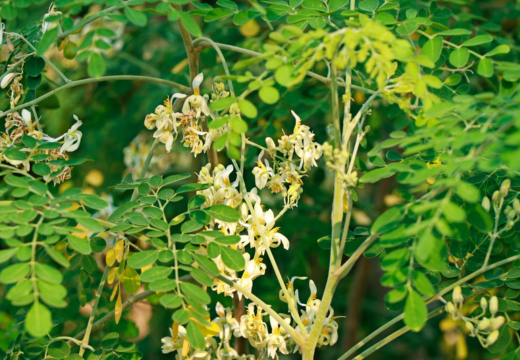
Moringa oleifera is a graceful, fast-growing, small to medium-sized deciduous tree that generally reaches a height of 10–12 meters with a trunk diameter of about 45 cm. It thrives well in loamy and well-drained sandy soils, particularly in tropical and subtropical regions. The tree possesses a straight trunk with smooth, dark grey bark covered by a thick corky layer, while young shoots are greenish-white or purplish and finely hairy. It develops a deep taproot system and an open, umbrella-shaped crown with irregularly arranged branches. The leaves are large, tripinnate, and composed of rounded to elliptical leaflets that are dark green above and pale underneath. Fragrant, bisexual flowers are borne in loose inflorescences measuring about 10–25 cm long and have creamy white to yellowish petals with delicate veins. The fruit is a long, pendulous, three-sided pod that turns brown upon maturity and contains numerous dark brown seeds with papery wing-like structures that aid in wind dispersal.
Varieties of Moringa oleifera Lam./ Moringa pterygosperma Gaertn./ Shigru/ Sahijana/ Drum Stick Tree/ Horse Radish Tree
According to Bhavprakash Nighantu:
- Black Sahijana (Shyam)
- White Sahijana (Shweta)
- Red Sahijana (Lal)
According to Raj Nighantu:
- Neel Shigru (Blue)
- Shweta Shigru (White)
- Rakta Shigru (Red)
Classical categorisation of Moringa oleifera Lam./ Moringa pterygosperma Gaertn./ Shigru/ Sahijana/ Drum Stick Tree/ Horse Radish Tree
- According to Charaka Samhita: Krimighna – Anti-parasitic herb, Svedopaga – Sudation-supporting herb, Shirovirechanopaga – Nasya-supporting herb, Katuka Skandha – Pungent herb group, Udvartana Yoga – Powder massage herb, Sthavara Sneha Yoni – Plant oil source.
- According to Charaka Samhita and Vagbhata: Varunadi Gana.
- According to Bhavprakash Nighantu: Guduchyadi Varga.
- According to Raj Nighantu: Mulakadi Varga.
- According to Raj Nighantu: Karavadi Varga.
Ancient Verse of Moringa oleifera Lam./ Moringa pterygosperma Gaertn./ Shigru/ Sahijana/ Drum Stick Tree/ Horse Radish Tree
According to Bhavprakash Nighantu:
शोभाञ्जन: शिग्रुतीक्ष्णगन्धकाक्षीवमोचका:।
तद्बीजं श्वेतमरिचं मधुशिग्रु: सलोहित:।
शिग्रु: कटु: कटु: पाके तीक्ष्णोष्णो मधुरो लघु:।
दीपनो रोचनो रूक्ष: क्षारस्तिक्तो विदाहकृत्।
संग्राही शुक्रलो हृद्य: पित्तरक्तप्रकोपण:।
चक्षुष्य: कफवातघ्नो विद्रधिश्वयथुक्रिमीन्।
मेदोऽपचीविषप्लीहगुल्मगण्डव्रणान्हरेत्।
श्वेत: प्रोक्तगुणो ज्ञेय विशेषदाहकृद्भवेत्।
प्लीहानं विद्रधिं हन्ति व्रणघ्न: पित्तरक्तहृत्।
मधुशिग्रु: प्रोक्तगुणो विशेषाद्दीपन: सर:।। (Bhavprakash Nighantu Guduchyadi varga 105-108)
According to the above shloka, Sahijan (Moringa) is known by various Sanskrit names such as Shobhanjan and Shigru, and it generally exists in three types: black (Shyam), white (Shweta), and red (Madhu-shigru). The primary properties of Shigru are pungent in taste, sharp, hot in potency, light, and digestive; it stimulates appetite and treats disorders related to Kapha and Vata, though it may aggravate Pitta and blood. It is highly effective in treating conditions like inflammation, abscesses, intestinal worms, obesity, spleen disorders, and goiter. While the white variety is specifically noted for causing a burning sensation and being beneficial for the spleen and wounds, the red variety (Madhu-shigru) shares these general properties but is particularly noted for being a powerful digestive stimulant and a mild laxative. Furthermore, the juice extracted from the bark and leaves of the Sahijan tree is specifically highlighted for its ability to alleviate severe or unbearable pain.
शिग्रुवल्कलपत्राणां स्वरस: परमार्त्तिहृत्।। (Bhavprakash Nighantu Guduchyadi varga 109)
According to the above shloka, the juice extracted from the bark and leaves of the Sahijan tree is highly potent and is used specifically to alleviate intense or unbearable pain.
चक्षुष्यं शिग्रुजं बीजं तीक्ष्णोष्णं विषनाशनम्।
अवृष्यं कफवातघ्नं तन्नस्येन शिरोऽर्त्तिनुत्।। (Bhavprakash Nighantu Guduchyadi varga 110)
According to the above shloka, the seeds of the Sahijan (Moringa) tree are beneficial for the eyes, sharp in action, hot in potency, and act as an antidote to poisons. While they are considered non-aphrodisiac and effective at balancing Kapha and Vata doshas, their powder is specifically used as a nasal treatment (Nasya) to eliminate headaches and head pain.
According to Raj Nighantu:
शिग्रुस्तीक्ष्णोष्णकटुक: शाकपत्र: सुपत्रक:।
उपदंश: क्षमादंशो ज्ञेय: कोमलपत्रक:।
बहुमूलो दंष्ट्रालस्तीक्ष्णमूलो दंष्ट्राह्वय:।।
शिग्रु: कटुस्तिक्तोष्णस्तीक्ष्णो वातकफापह:।
मुखजाड्यहरो रुच्यो दीपनो व्रणदोषनुत्।। (Raj Nighantu Mulkadi varga 26-27)
According to the above shloka, the plant Shigru is described as possessing pungent, bitter, hot, and sharp properties that allow it to act as an anti-kapha and anti-vata agent. Its medicinal actions include serving as an appetiser and digestive stimulant, removing numbness or “uselessness” of the mouth and tongue, and acting as a cleanser for wounds. The shloka reinforces these qualities while providing ten distinct synonyms for the plant: Shigru, which identifies the tree itself; Harit-shaka and Sakapatra, referring to its use as a leafy vegetable; Supatraka and Komal-patraka, highlighting its good or tender leaves; Upadansa and Ksama-dansa, likely relating to its biting or pungent nature; and Bahumula, Dansa-mula, and Tikshna-mula, which describe its roots as being numerous, sharp, or pungent.
शोभाञ्जना नीलशिग्रुस्तीक्ष्णगन्धो जनप्रिय:।
मुखामोद: कृष्णशिग्रुश्चक्षुष्यो रुचिरञ्जन:।।
शोभाञ्जनस्तीक्ष्णकटु: स्वादूष्ण: पिच्छिलस्तथा।
जन्तुवातार्त्तिशूलघ्नश्चक्षुष्यो रोचन: पर:।। (Raj Nighantu Mulkadi varga 28-29)
According to the above shloka, Nila-Shigru, also known as Shobhanjana or Krishna-Shigru, is a plant popular among people for its sharp fragrance and its ability to act as a mouth freshener. This variety is specifically noted for being beneficial for the eyes and for its pleasing qualities. It is characterised by its sharp, pungent, and slightly sweet yet hot potency, as well as its slimy or “picchila” texture. Medicinally, it is highly effective at destroying worms (jantu), alleviating Vata-related pain and colic (shoola), improving eyesight, and serving as an excellent appetiser that enhances the taste and desire for food.
श्वेतशिग्रु: सुतीक्ष्ण: स्यान्मुखभङ्ग: सिताह्वय:।
सुमुल: श्वेतमरिचो रोचनो मधुशिग्रुक:।।
श्वेतशिग्रु: कटुस्तीक्ष्ण: शोकानिलनिकृन्तन:।
अंगव्यथाहरो रुच्यो दीपनो मुखजाड्यनुत्।। (Raj Nighantu Mulkadi varga 30-31)
Shweta-Shigru, which is also known by synonyms such as Sutikshana, Sitahvaya, Shweta-maricha, and Madhu-Shigru, is described as being very pungent and sharp in nature. Its medicinal properties include the ability to alleviate oedema (swelling) and Vata disorders, and it acts as an effective analgesic. Furthermore, it serves as a powerful appetiser and digestive stimulant, cures the tastelessness or numbness of the mouth, and is considered beneficial for the eyes.
According to Dhanwantari Nighantu:
शिग्रुर्हरितशाकश्च दीर्घको लघुपत्रकः।
अवदंशक्षमों दंशः प्रोक्तो मूलकपर्ण्यपि॥
शोभाञ्जनस्तीक्ष्णगन्धो मुखभङ्गोऽथ शिप्रुकः।
श्वेतकः श्वेतमरिचो रक्तको मधुशिग्रुकः॥
शिग्रुस्तिक्तः कटुश्चोष्णः कफशोफसमीरजित्।
कृम्यामविषमेदोघ्नो विद्रधिप्लीहगुल्मनुत्॥ (Dhanwantari Nighantu Karavadi varga 36-38)
The Moringa plant is known by several synonyms, including Haritashaka, Shigruka, Laghupatraka, Avadanshakshama, Dansha, Mulakaparnī, Shobhanjana, Tikshnagandha, Mukhabhanga, and Shigruka. In Ayurveda, it is described as having pungent and bitter tastes along with hot potency (ushna virya), which helps in balancing Kapha and Vata doshas. Traditionally, Moringa is valued for its therapeutic properties and is used in the management of worm infestations, indigestion, poisoning, obesity, abscesses, spleen disorders, and abdominal tumours.
Ayurvedic properties of Moringa oleifera Lam./ Moringa pterygosperma Gaertn./ Shigru/ Sahijana/ Drum Stick Tree/ Horse Radish Tree
- Taste (Rasa): Pungent (Katu), Bitter (Tikta)
- Physical Property (Guna): Light (Laghu)
- Potency (Veerya): Hot Potency (Usna)
- Effect on Tridosha: Balances Vata and Kapha Dosha
Therapeutic Indications of Moringa oleifera Lam./ Moringa pterygosperma Gaertn./ Shigru/ Sahijana/ Drum Stick Tree/ Horse Radish Tree
- Shotha – Helps reduce inflammation and swelling.
- Vidradhi – Useful in abscess management.
- Krimi – Effective against intestinal worms.
- Sthaulya – Supports obesity management.
- Pliha Roga – Beneficial in spleen disorders.
- Galaganda – Traditionally used in goitre conditions.
- Deepana – Improves digestive fire and appetite.
- Rechana – Acts as a mild laxative.
- Vedanasthapana – Helps relieve severe pain.
- Vrana Ropana – Supports wound healing.
- Kapha-Vata Shamaka – Balances Kapha and Vata Doshas.
Systemic actions of Moringa oleifera Lam./ Moringa pterygosperma Gaertn./ Shigru/ Sahijana/ Drum Stick Tree/ Horse Radish Tree
External Use
Leaves and seed preparations are externally applied for headache relief, wound healing, skin infections, boils, ulcers, and healthy skin.
Internal Uses
Digestive System
Moringa improves digestion and is useful in gastric ulcers, diarrhoea, indigestion, and inflammation of the mucous membrane. It also helps reduce high cholesterol levels.
Circulatory System
Moringa supports cardiac and circulatory health and is beneficial in managing hypertension and reducing the risk of heart disease. Its antioxidant properties help protect the body from free radicals and infections.
Respiratory System
The gum of Moringa is useful in asthma, while the leaves are beneficial in bronchitis and fever.
Excretory System
Moringa gum possesses diuretic properties and helps promote urine flow.
Reproductive System
Drumstick fruit helps improve the quality and quantity of sperm and strengthens the male reproductive system.
Skin
Moringa is beneficial for healthy and glowing skin. It helps in wound and ulcer healing due to its antibacterial and anti-inflammatory properties and is also useful in skin infections and boils.
Satmikarana
Being rich in calcium and magnesium, Moringa strengthens bones and teeth and is beneficial in osteoporosis and other bone disorders.
Tapakrama
Moringa helps pacify Vata and Kapha doshas and is useful in inflammatory conditions such as arthritis, rheumatism, cramps, and gout.
Chemical composition of Moringa oleifera Lam./ Moringa pterygosperma Gaertn./ Shigru/ Sahijana/ Drum Stick Tree/ Horse Radish Tree
- Phytochemicals: Rich in glucosinolates, isothiocyanates, phenolics, flavonoids, carotenoids, tannins, saponins, and alkaloids.
- Unique Bioactive Compounds: Contains niazimicin, niazirin, pterygospermin, benzyl isothiocyanate, and 4-(α-L-rhamnopyranosyloxy) benzyl glucosinolate.
- Leaves: Abundant in proteins, dietary fiber, vitamins A, C, and E, along with phenolic compounds such as quercetin, rutin, chlorogenic acid, caffeoylquinic acids, and luteolin.
- Seeds: Contain 40–42% oil rich in oleic acid, along with proteins, β-sitosterol, glucosinolates, fatty acids, and minerals.
- Roots: Contain alkaloids such as moringinine, sterols, and phenolic compounds.
- Bark: Rich in tannins, alkaloids, flavonoids, and polyphenols.
- Flowers: Contain flavonoids, amino acids, sugars, and antioxidant nutrients.
- Pods (Fruits): A source of dietary fiber, vitamins, and phenolic compounds.
- Minerals: Major minerals include calcium, potassium, magnesium, iron, and phosphorus.
- Leaf Powder Composition: Approximately 25–29% protein, 29–44% carbohydrates, 5–7% fats, 10% ash, and 25% dietary fiber.
- Important Antioxidants: Quercetin, kaempferol, myricetin, β-carotene, and ascorbic acid.
- Biological Activities: Bioactive compounds from different plant parts exhibit antioxidant, anti-inflammatory, antimicrobial, hepatoprotective, antidiabetic, cardioprotective, antihypertensive, and anticancer activities.
Actions and Properties of Various Chemical Constituents of Moringa oleifera Lam./ Moringa pterygosperma Gaertn./ Shigru/ Sahijana/ Drum Stick Tree/ Horse Radish Tree
For Cardiovascular System
Moringa oleifera helps support cholesterol balance and cardiovascular health due to the presence of bioactive compounds such as flavonoids, polyphenols, phytosterols, saponins, isothiocyanates, and essential fatty acids. Compounds like β-sitosterol and dietary fiber reduce the absorption of cholesterol in the intestines, thereby lowering LDL and total cholesterol levels. Saponins promote the excretion of bile acids and cholesterol, while isothiocyanates help prevent fat accumulation in the liver. Antioxidants such as quercetin, rutin, kaempferol, chlorogenic acid, gallic acid, and ferulic acid protect blood vessels from oxidative stress and inflammation, reducing the risk of atherosclerosis. The seeds are rich in oleic, linoleic, and linolenic acids, which help decrease triglycerides and improve HDL (good cholesterol) levels. Additionally, potassium and magnesium aid in regulating blood pressure by relaxing blood vessels and improving circulation, thereby supporting overall heart function and cardiovascular protection.
For Digestive System
Moringa oleifera supports digestive health through the combined action of flavonoids, phenolic acids, glucosinolates, isothiocyanates, dietary fiber, and water-soluble polysaccharides present in its leaves and roots. Flavonoids such as quercetin, kaempferol, and rutin possess strong antioxidant and anti-inflammatory properties that help protect the gastric lining and reduce ulcers, gastritis, and intestinal inflammation. Isothiocyanates and glucosinolates, including unique compounds like Moringa isothiocyanate-1 (MIC-1), contribute to anti-ulcer and gastroprotective effects by reducing inflammatory responses in the gut. Phenolic acids such as chlorogenic, ferulic, and ellagic acids help control harmful gut bacteria while supporting beneficial intestinal microbiota. The high dietary fiber content improves bowel movements, relieves constipation, and acts as a natural prebiotic for gut health. Additionally, water-soluble polysaccharides help maintain healthy intestinal flora and support proper gastrointestinal motility, making Moringa beneficial in conditions such as constipation, gastric ulcers, and inflammatory bowel disorders.
Anti-obesity Activity
Moringa oleifera exhibits anti-obesity activity due to the presence of bioactive compounds such as isothiocyanates, flavonoids, polyphenols, saponins, and chlorogenic acid. Moringa isothiocyanates (MICs) help reduce fat absorption, improve insulin sensitivity, and regulate genes involved in fat storage, thereby preventing excessive fat accumulation. Flavonoids like quercetin and rutin support weight management by reducing blood lipid levels and enhancing energy metabolism through activation of the AMPK pathway. These compounds also help regulate appetite-related hormones such as leptin and adiponectin, which assist in controlling hunger and satiety. Polyphenols and saponins reduce inflammation and oxidative stress associated with obesity while inhibiting the formation of new fat cells. Chlorogenic acid further supports metabolism by promoting thermogenesis, stabilising blood sugar levels, and reducing food cravings, thereby contributing to healthy weight management.
For Goiter
Moringa oleifera supports thyroid health and may help in the management of goitre due to the presence of glucosinolates, flavonoids, polyphenols, alkaloids, and essential minerals such as zinc and copper. Glucosinolates and cyanogenic compounds are converted into thiocyanates in the body, which compete with iodine uptake in the thyroid gland and help regulate excessive thyroid hormone production. Flavonoids such as quercetin and kaempferol possess anti-inflammatory and antioxidant properties that help reduce thyroid swelling and glandular enlargement. Alkaloids like vincosamide and niazinin may assist in slowing the conversion of thyroxine (T4) to the more active triiodothyronine (T3), thereby helping to control overactive thyroid activity. These combined actions help reduce inflammation, regulate thyroid hormone synthesis, and support healthy thyroid function, making Moringa beneficial in conditions associated with thyroid enlargement and hyperactivity.
For Eye Disorders
Moringa oleifera supports eye health due to its rich content of antioxidants, flavonoids, carotenoids, and essential vitamins. Beta-carotene, a precursor of vitamin A, helps maintain healthy photoreceptor cells, supports night vision, and protects the retina from damage. Flavonoids such as quercetin, myricetin, and luteolin possess strong antioxidant and anti-inflammatory properties that help reduce retinal inflammation and protect ocular tissues from oxidative stress. Lutein and zeaxanthin act as protective pigments that filter harmful blue light and help prevent age-related macular degeneration and retinal damage. Vitamins C and E further protect eye cells by neutralising free radicals, thereby reducing the risk of cataracts, dry eyes, and glaucoma. Through these combined actions, Moringa helps preserve vision, protect delicate eye structures, and support overall ocular health.
Why is Moringa oleifera regarded as a superfood?
Moringa oleifera is regarded as a “superfood” because of its rich nutritional and phytochemical composition that supports overall health and wellness. The leaves contain all nine essential amino acids, making it an excellent plant-based protein source important for muscle repair, tissue regeneration, and hormone synthesis. It is also abundant in antioxidants and anti-inflammatory compounds such as quercetin, kaempferol, chlorogenic acid, and unique isothiocyanates, which help neutralise free radicals and reduce chronic inflammation. Chlorogenic acid supports healthy blood sugar regulation, while quercetin contributes to cardiovascular health by helping maintain normal blood pressure. Moringa is highly nutritious due to its high content of vitamins A, C, and K, which support vision, immunity, skin health, and blood clotting functions. Additionally, it provides essential minerals, including calcium, iron, potassium, and magnesium, that are important for bone strength, oxygen transport, electrolyte balance, and muscle function. The combined action of these nutrients and bioactive compounds helps improve energy, immunity, metabolism, and overall physiological function, making Moringa a valuable functional food.
Practical Uses / Health Benefits of Moringa oleifera Lam./ Moringa pterygosperma Gaertn./ Shigru/ Sahijana/ Drum Stick Tree/ Horse Radish Tree
- Fresh Leaf Paste: Applied to the forehead to relieve a severe headache.
- Leaf or Bark Paste: Externally applied to wounds, ulcers, boils, and inflammatory swellings for faster healing.
- Warm Bark Paste: Traditionally used over painful joints in arthritis, rheumatism, and body pain.
- Root Bark Decoction: Used as a gargle to help manage throat disorders and oral infections.
- Fresh Root Paste: Mixed with mustard and applied externally for localised pain and swelling.
- Moringa Leaf Tea: Consumed for gastric ulcers, indigestion, and diarrhoea.
- Dried Leaf Powder: Taken to support healthy blood pressure and cardiovascular health.
- Seed Powder: Traditionally used in skin infections, scurvy, and as a protective remedy against toxins.
- Leaves, Seeds, and Pods: Consumed to reduce inflammation in conditions such as gout, cramps, and rheumatism.
- Drumstick Fruits: Used to improve male reproductive strength and sperm quality.
- Plant Gum: Traditionally used in asthma and urinary disorders because of its diuretic properties.
- Tender Leaves and Pods: Consumed to strengthen bones and teeth due to their rich calcium and mineral content.
- Leaf Preparations: Also used in bronchitis, fever, eye infections, and ear infections.
- Flowers Boiled in Milk: Traditionally consumed as a rejuvenating and strengthening tonic.
- Tender Leaf Vegetables: Used as a mild natural laxative to promote proper bowel movements.
Parts Used of Moringa oleifera Lam./ Moringa pterygosperma Gaertn./ Shigru/ Sahijana/ Drum Stick Tree/ Horse Radish Tree
- Bark
- Seeds
- Leaves
- Fruits
- Flowers
Dosage of Moringa oleifera Lam./ Moringa pterygosperma Gaertn./ Shigru/ Sahijana/ Drum Stick Tree/ Horse Radish Tree
- Root bark powder- 4-8 gms
- Decoction- 5-10 ml
Classical Products of Moringa oleifera Lam./ Moringa pterygosperma Gaertn./ Shigru/ Sahijana/ Drum Stick Tree/ Horse Radish Tree
- Prabhanjanam Kuzhambu
- Shigru Guggul
Planet Ayurveda Products with Moringa oleifera Lam./ Moringa pterygosperma Gaertn./ Shigru/ Sahijana/ Drum Stick Tree/ Horse Radish Tree
- Moringa Powder
- Moringa Oil
- Moringa Churna / Shigru Powder
- AT Complex Capsules
- Jasnoor Eye Drops
- Energo Plan Syrup
- Bone Support Capsules
- Eve Plus Capsules
- Niere Vet Powder
- Telomere Boostup Capsules
- Shigru Guggul
- Augen Care Drops
- Telo Extension Capsules
- Dermo Plan Syrup
- Kottamachu Thailam
- Sarvjwarhar Loha
- Fur Coat Syrup
- Cotton Asthiadi Thailam
- Maha Sudarshan Kwath
Conclusion
Moringa oleifera is a highly valued medicinal and nutritional plant known for its wide range of therapeutic properties and rich phytochemical composition. It contains essential vitamins, minerals, antioxidants, flavonoids, glucosinolates, and other bioactive compounds that contribute to its diverse pharmacological activities. Traditionally, Moringa has been used in the management of inflammatory disorders, digestive problems, cardiovascular diseases, respiratory ailments, skin disorders, bone diseases, and reproductive health issues. Its antioxidant, anti-inflammatory, antimicrobial, cardioprotective, and nutritive properties make it an important herb in both traditional and modern healthcare systems. Due to its immense nutritional value and medicinal potential, Moringa is rightly regarded as a “miracle tree” and functional superfood beneficial for maintaining overall health and well-being.