


Watermelon (Citrullus vulgaris Schrad.) – Properties, Varieties, Composition & Dosages
Abstract
Watermelon (Citrullus vulgaris Schrad), a widely consumed fruit known for its refreshing taste and high water content, is not only a summer staple but also a valuable medicinal plant in Ayurveda. It is used to alleviate thirst, cool the body, and support urinary and digestive functions. Its nutritional and therapeutic qualities make it a beneficial fruit for maintaining health and managing certain diseases.
Introduction
Watermelon is a well-known cooling, nourishing, and therapeutic fruit. It deeply hydrates the body, supports detoxification, and helps flush out toxins. It is especially beneficial in relieving inflammation, fatigue, excessive thirst, oedema, kidney infections, painful or scanty urination and bladder infections. Additionally, it acts as a natural diuretic. Watermelon, a member of the Cucurbitaceae family, is cultivated extensively for its sweet, juicy fruit. Apart from being a popular dietary fruit, it holds an important place in traditional medicine, especially in Ayurveda, where it is used to pacify Pitta and support hydration, digestion and detoxification. Every part of the plant, from fruit to seeds, is used for different health benefits.
Scientific Classification
- Kingdom – Plantae
- Division – Magnoliophyta
- Class – Magnoliopsida
- Order – Cucurbitales
- Family – Cucurbitaceae
- Genus – Citrullus
- Species – C. vulgaris
- Latin name – Citrullus vulgaris
Synonyms of Latin names: Citrullus amarus, Citrullus lanatus
Synonym
- Kalinga
- Kalinda
- Tarabooja
- Krishna Beej (Due to black seeds)
- Suvartula
Vernacular Names
- Hindi: Tarbooj
- Sanskrit: Kalinga
- Tamil: Tharbujam
- Telugu: Tarboojapand
- Kannada: Kallangadi
- Bengali: Tarmuj
- Gujarati: Tarabooj
- Marathi: Tarbooj
- Malayalam: Tarpusha
- Punjabi: Tarbuja
Habitat
Watermelon is a tropical and subtropical plant that requires a warm climate and sandy loam soil for optimal growth. It is cultivated extensively across India and in other warm regions around the globe. It thrives in well-drained soil and full sunlight, making it suitable for cultivation during the hot summer season. Watermelon originates from the Kalahari Desert in Africa.
Morphology
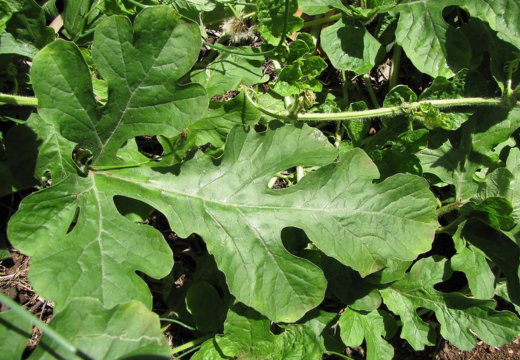
Watermelon is a trailing annual plant with stems that can grow up to 3 meters in length, featuring branched tendrils at each node. The leaves are ovate to obovate, measuring 8–20 cm, deeply lobed, and coarse to the touch. It produces small yellow flowers. The fruit is round to oblong in shape, with skin colours varying from yellow and light green to dark green. It contains numerous seeds—black, white, or brown, flattened and embedded within its juicy, edible pulp.
Classical Categorisation
- According to Bhavprakash Nighantu- Amradi Phala Varga
Ancient Verses
कालिन्दं ग्राहि दृक्पित्तशुक्रहृच्छीतलं गुरु ॥
पक्वन्तु सोष्णं सक्षारं पित्तलं कफवातजित् ॥(Bhavprakash Nighantu Amradi Phala varga 43)
According to the above shloka, raw watermelon is absorbent, has cold potency, is heavy in nature, balances Pitta dosha, and decreases vision and aphrodisiac power. The ripe watermelon is hot in potency, alkali, increases Pitta dosha and balances Vata and Kapha dosha.
Ayurvedic Properties
- Taste (Rasa)- Sweet (Madhur)
- Physical property (Guna)- Heavy (Guru)
- Potency (Veerya)- Cold Potency (Sheet)
- Effect on tridosha- Ripe fruit balances Vata and Kapha dosha, and raw fruit balances Pitta dosha
Therapeutic Properties
- Relieves burning sensation
- Relieves fatigue
- Diuretic
- Increases body strength
Systemic actions
Urinary System – It has a diuretic nature and cool potency, so effective in various urinary problems.
Chemical Composition
- Pentadecanoic acid
- Monopentadecanoin
- 2,3-Dihydroxypropyl nonadecanoate
- Lignoceric acid-2,3-dihydroxy-propanenyl ester
- Lancerebroside 5
- Salicylic acid
- 4-Hydroxybenzoic acid
- Hydroquinone
- Succinic acid
- Vanillic acid
Modern overview
Hypoglycemic index
A study evaluating the hypoglycemic effects of the ethanolic seed extract of Citrullus lanatus concluded that the extract effectively regulates blood glucose levels, supports antioxidant activity in various organs and protects them from oxidative damage.
Practical uses
- For Bleeding After Abortion: Root juice is traditionally used to stop bleeding following an abortion.
- For Typhus Fever: Watermelon juice serves as an antiseptic in cases of typhus fever.
- For Painful Urination and Urinary Disorders: A mixture of watermelon juice with sugar and cumin acts as a cooling drink and is effective for painful urination, urinary tract infections, gonorrhea, liver inflammation, and congestion.
- For Aphthous Ulcers: The ash made from dried watermelon rind is applied to treat aphthous ulcers in the mouth.
- For Diarrhoea: In certain regions, the pericarp of watermelon is used as a remedy for diarrhoea.
Parts Used
- Seeds
- Fruit
- Flowers
- Roots
Conclusion
Watermelon (Citrullus vulgaris Schrad) is much more than a refreshing fruit; it holds immense medicinal value in traditional medicine. Its hydrating, cooling and detoxifying actions make it a versatile remedy for heat-related conditions, urinary disorders and skin ailments. With its rich nutritional and phytochemical profile, watermelon continues to be an important plant in promoting overall health and well-being.