


Cardiac MRI – What Is It? Why Is It Done? How Can Ayurveda Support Heart Health?
Abstract
Cardiac MRI (Magnetic Resonance Imaging) is an advanced, non-invasive imaging test used to obtain highly detailed images of the heart’s structure and function. It uses powerful magnetic fields and radio waves to create precise images of the heart muscles, chambers, valves, and surrounding tissues without the use of radiation. Cardiac MRI helps doctors evaluate heart size, detect structural abnormalities, assess heart muscle function, identify areas of damage after heart attacks, and detect inflammation or congenital heart defects. This test plays a crucial role in diagnosing various heart diseases, including cardiomyopathy, myocarditis, congenital heart disease, and heart failure. From an Ayurvedic perspective, heart disorders fall under Hridroga, where disturbances in Vata may affect heart rhythm and movement, aggravated Pitta may lead to inflammation, and increased Kapha may cause obstruction in channels (Srotorodha). Ayurveda emphasizes restoring Dosha balance, strengthening heart tissues, improving circulation, and preserving Ojas, the vital essence responsible for strength and vitality.
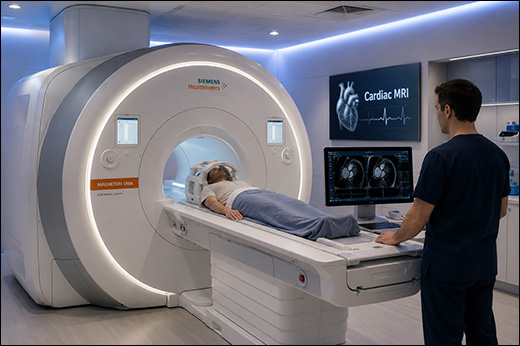
What Is A Cardiac MRI?
Cardiac MRI is a specialized imaging test that evaluates the structure, function, and tissue characteristics of the heart using magnetic resonance technology.
During The Test
- The patient lies on a movable table that slides into the MRI scanner.
- Electrodes are attached to the chest to monitor heart rhythm during the scan.
- The MRI machine uses strong magnetic fields and radio waves to capture detailed images of the heart.
- A contrast agent may be injected through an intravenous line to enhance visualization of heart tissues and detect abnormalities more clearly.
- The patient may be asked to hold their breath briefly at certain intervals to obtain clearer images.
- The entire procedure usually takes 30–60 minutes depending on the type of study.
Why Is A Cardiac MRI Done?
Doctors May Recommend Cardiac MRI To
- Evaluate heart structure and size
- Assess heart muscle function
- Detect congenital heart defects
- Diagnose cardiomyopathy
- Identify heart muscle damage after a heart attack
- Detect inflammation of heart muscle (myocarditis)
- Evaluate heart valve abnormalities
- Assess blood flow and cardiac output
- Monitor heart disease progression
- Evaluate tumors or masses in the heart
What Can A Cardiac MRI Detect?
This Test Can Help Identify
- Cardiomyopathy (weak or thickened heart muscle)
- Myocarditis (inflammation of heart muscle)
- Congenital heart defects
- Areas of scar tissue from previous heart attacks
- Heart valve abnormalities
- Pericardial disease (inflammation around the heart)
- Cardiac tumors or abnormal masses
- Reduced heart pumping efficiency
- Structural abnormalities of heart chambers
Because Cardiac MRI produces highly detailed images of heart tissues, it is considered one of the most accurate tools for evaluating heart structure and detecting early-stage cardiac diseases.
Ayurvedic Perspective On Heart Structural And Functional Disorders
In Ayurveda, the Hridaya (heart) is considered the seat of consciousness, emotions, and circulation. Any imbalance in bodily or mental health can affect cardiac stability.
Excess Vata, caused by stress, irregular lifestyle, fasting, anxiety, and excessive activity, may disturb heart rhythm and circulation.
Symptoms May Include
- Palpitations
- Irregular heartbeat
- Anxiety
- Restlessness
- Poor circulation
- Pitta Imbalance
Aggravated Pitta, caused by anger, overheating, spicy food, and mental stress, may contribute to inflammation affecting heart tissues.
Symptoms May Include
- Burning sensation
- Irritability
- Inflammatory conditions
- Increased blood pressure
- Kapha Imbalance
Excess Kapha may lead to heaviness, sluggish metabolism, and lipid accumulation. This can cause Srotorodha (channel obstruction) affecting circulation.
Symptoms May Include
- Heaviness in chest
- Slow circulation
- Fluid retention
- Increased cholesterol
- Depletion of Ojas
Poor diet, chronic illness, and prolonged stress weaken Rasa Dhatu and Rakta Dhatu, reducing nourishment to the heart and leading to reduced vitality and endurance.
Ayurvedic Herbal Support According To Cardiac Conditions
Instead of using the same herbs for all heart diseases, Ayurveda recommends herbs according to specific pathology.
For Cardiomyopathy (Weak Heart Muscle)
- Arjuna (Terminalia arjuna): Strengthens cardiac muscles and improves heart efficiency.
- Punarnava (Boerhavia diffusa): Helps reduce fluid retention and supports circulation.
- Pushkarmool (Inula racemosa): Improves cardiac function and supports oxygen delivery.
For Myocarditis (Inflammatory Heart Conditions)
- Guduchi (Tinospora cordifolia): Supports immunity and reduces inflammation.
- Ashwagandha (Withania somnifera): Enhances strength and supports tissue repair.
- Yashtimadhu (Glycyrrhiza glabra): Helps reduce inflammation and protects tissues.
For Congenital and Structural Heart Disorders
- Arjuna (Terminalia arjuna): Supports heart strength and improves endurance.
- Brahmi (Bacopa monnieri): Supports nervous system and improves coordination between heart and brain.
- Shankhpushpi (Convolvulus pluricaulis): Supports mental calmness and improves heart stability.
For Heart Failure And Fluid Retention
- Punarnava (Boerhavia diffusa): Reduces fluid accumulation and improves kidney function.
- Gokshura (Tribulus terrestris): Supports urinary function and fluid balance.
- Varuna (Crataeva nurvala): Supports vascular health and fluid regulation.
A Balanced Heart-Supportive Routine In Ayurveda
Morning Routine
- Wake up early during Brahma Muhurta.
- Drink warm water to stimulate digestion.
- Perform Abhyanga (oil massage) using warm sesame oil.
Practice Gentle Yoga Such As
- Tadasana (Mountain Pose)
- Bhujangasana (Cobra Pose)
- Setu Bandhasana (Bridge Pose)
Practice Pranayama
- Anulom Vilom (Alternate Nasal Breathing)
- Bhramari Pranayama (Humming Bee Breath)
Heart-Friendly Diet
- Consume fresh, warm, and easily digestible meals.
- Include leafy vegetables, bottle gourd, pumpkin, and seasonal fruits.
- Use small amounts of cow ghee.
- Reduce excessive salt and fried foods.
- Avoid processed foods and refined sugar.
- Avoid heavy meals late at night.
Lifestyle Guidelines
- Maintain 7–8 hours of proper sleep.
- Avoid excessive physical and mental stress.
- Take daily walking exercise.
- Maintain a balanced daily routine.
Mental & Emotional Care
- Practice meditation for 10–15 minutes daily.
- Chanting or mantra recitation helps calm the nervous system.
- Reduce prolonged screen exposure.
- Maintain emotional stability and positivity.
Conclusion
Cardiac MRI is a highly advanced and reliable diagnostic imaging test that provides detailed information about heart structure, function, and tissue health. It plays a vital role in detecting cardiomyopathy, myocarditis, congenital heart defects, valve abnormalities, and structural disorders of the heart. Early detection through Cardiac MRI helps guide accurate treatment and prevents progression of heart diseases. From an Ayurvedic perspective, heart disorders arise due to imbalance of Vata, Pitta, and Kapha, obstruction in channels (Srotorodha), and depletion of Ojas. Ayurveda focuses on correcting these imbalances through individualized herbs, balanced diet, proper lifestyle, and stress management. Integrating modern diagnostic tools like Cardiac MRI with Ayurvedic preventive care supports better heart strength, improves circulation, and enhances overall cardiovascular well-being.