


Liquid Biopsy For Breast Cancer – What Is It? Why Is It Done? How Can Ayurvedic Herbs Help?
Abstract
Breast cancer is like a quiet storm inside the body—a moment where a single cell forgets the rhythm of life and begins to grow on its own. It starts as a small, hidden secret, but it changes everything it touches. It is a journey of strength and shadows. There are the cold, quiet rooms of hospitals and the brave maps of scars left behind on the skin. It feels like losing a piece of yourself, yet finding a power you never knew you had. It is the reflection in the mirror that looks different, but shows a person who is a true warrior. Beyond the medicine and the fear, it is about resilience. It is the light that stays on even in the darkest night. It is the courage to keep breathing, keep fighting, and keep blooming, even when the seasons feel harsh. It is a story of a heart that refuses to give up.
Introduction
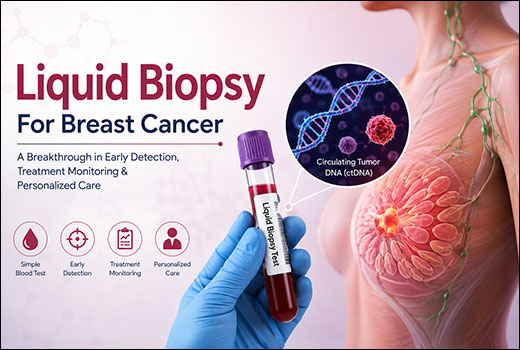
Liquid biopsy represents a transformative shift in breast cancer management, moving from invasive surgical sampling toward a "dynamic" blood-based analysis. By isolating circulating tumor DNA (ctDNA) and circulating tumor cells (CTCs) from a simple blood draw, clinicians can capture the genetic landscape of a malignancy without the risks associated with traditional tissue biopsies. This approach is particularly valuable for breast cancer because it accounts for tumor heterogeneity, reflecting the diverse genetic makeup of both primary tumors and metastatic sites. Furthermore, liquid biopsies allow for real-time monitoring of treatment efficacy and the early detection of molecular relapse—often identifying cancer recurrence months before it becomes visible on an MRI or mammogram. Ultimately, this technology empowers oncologists to adjust therapies precisely as a tumor evolves, ushering in a more responsive era of personalized precision medicine.
What Happens During The Procedure?
The procedure for a liquid biopsy is straightforward and mirrors a routine blood test, though the laboratory processing that follows is highly sophisticated.
1. Preparation and Collection
Unlike a surgical biopsy, no fasting or anesthesia is required. A phlebotomist or nurse performs a standard venipuncture, typically in the arm. Using a needle, they collect approximately 7 to 20 mL of blood (usually two to four specialized tubes). These tubes often contain preservatives to prevent the patient’s healthy white blood cells from breaking open and diluting the small amount of cancer DNA present.
2. Centrifugation (Separation)
Once the sample reaches the lab, it is placed in a centrifuge and spun at high speeds. This process separates the blood into its primary components. The goal is to isolate the plasma—the straw-colored liquid at the top—which contains the fragments of circulating tumor DNA (ctDNA) shed by breast cancer cells.
3. DNA Extraction And Analysis
Scientists extract the genetic material from the plasma and use high-sensitivity technologies like Next-Generation Sequencing (NGS) or Digital Droplet PCR (ddPCR). These tools act like a "molecular microscope," scanning for specific breast cancer mutations (such as PIK3CA or ESR1) or chromosomal changes.
4. Reporting
The identified genetic alterations are compared against a database of known cancer markers. A report is then generated for the oncologist, detailing whether the cancer is responding to current treatment or if a new "driver" mutation has emerged that requires a change in therapy.
Clinical Applications in Breast Cancer
In clinical practice, liquid biopsy has moved from a research curiosity to a vital tool for personalizing breast cancer care. Its applications span the entire journey of the disease, from initial diagnosis to long-term survivorship.
1. Advanced & Metastatic Disease
This is where liquid biopsy is currently most established. It is primarily used to identify “actionable mutations”—specific genetic glitches that can be treated with targeted drugs.
- Targeted Therapy Matching: Tests like Guardant360 CDx and FoundationOne Liquid CDx scan for mutations like PIK3CA (to qualify for alpelisib) or ESR1 (to qualify for elacestrant or newer drugs like camizestrant).
- Monitoring Resistance: If a patient stops responding to a certain hormone therapy, a liquid biopsy can detect the emergence of new mutations (like ESR1) that explain the resistance, allowing doctors to switch to a more effective treatment immediately.
2. Early-Stage Disease & MRD
A major shift is happening in using liquid biopsy to detect Minimal Residual Disease (MRD)—tiny amounts of cancer left in the body after surgery that are invisible to scans.
- Predicting Recurrence: Studies show that a positive ctDNA test after surgery can predict cancer recurrence 8 to 15 months before it shows up on a mammogram or MRI.
- Risk Stratification: Doctors can use MRD status to decide who needs aggressive chemotherapy and who might safely skip it, reducing unnecessary toxicity for low-risk patients.
3. Real-Time Treatment Monitoring
Rather than waiting 3 months for a CT scan to see if a tumor is shrinking, doctors can use liquid biopsy to track "tumor fraction" in the blood.
- Early Response Assessment: If ctDNA levels drop significantly after the first round of chemotherapy, it’s a strong sign the treatment is working.
- Clonal Evolution: Because cancer changes over time, liquid biopsies allow clinicians to "watch" the tumor evolve and adapt, ensuring the treatment plan remains updated to the cancer’s current genetic profile.
Advantages
- Minimally Invasive: Requires only a simple blood draw, avoiding the risks and pain of surgery.
- Captures Heterogeneity: Provides a "global" genetic picture of all tumors in the body, whereas a needle biopsy only samples one spot.
- Real-Time Tracking: Can be repeated frequently to monitor how a tumor evolves or responds to treatment.
- Early Warning: Can detect cancer recurrence months before it shows up on a traditional scan (MRI/CT).
Limitations
- Lower Sensitivity: Early-stage tumors may not shed enough DNA into the blood to be detected (risk of false negatives).
- Missing Context: Cannot show the physical structure (architecture) or grade of the tumor cells.
- Biological "Noise": Age-related DNA changes in normal blood cells can sometimes be mistaken for cancer mutations.
- Cost & Access: These specialized tests are expensive and may not be covered by all insurance providers.
Ayurveda’s Insight!
While Ayurveda does not possess a direct equivalent to modern genetic sequencing, it offers a profound conceptual parallel through the study of Rasa Dhatu (plasma) and Srotas (circulatory channels). In Ayurvedic pathology, the blood is viewed as the primary carrier of Ama (metabolic toxins) and vitiated Doshas that circulate throughout the body during the stage of Prasara (dissemination). This traditional focus on monitoring the systemic "flow" of imbalances mirrors the modern clinical goal of liquid biopsy, which seeks to detect circulating tumor DNA as a signal of disease before it manifests as a physical mass. Furthermore, the Ayurvedic framework of Shat Kriya Kala (the six stages of disease) emphasizes early intervention during the subtle, circulatory phases—a philosophy that aligns perfectly with the use of liquid biopsy for detecting Minimal Residual Disease (MRD). Ultimately, where modern medicine identifies the specific genetic "debris" of a tumor, Ayurveda views these markers as evidence of a systemic breakdown in the body’s internal environment, or "terrain," that requires holistic purification. Here are some ayurvedic herbs for the management of breast cancer-
1. Ashwagandha (Withania somnifera)
Classified as a Balya (strength-giver) and Rasayana, it balances Vata and Kapha. It is used to replenish Ojas (vital energy) depleted by chronic disease. It is a powerful adaptogen containing Withaferin A. Studies indicate it modulates the cortisol response and inhibits tumor angiogenesis (blood vessel growth). It significantly reduces "cancer-related fatigue" and anxiety during chemotherapy. Research suggests it may sensitize breast cancer cells to radiation while protecting healthy bone marrow cells from toxicity.
2. Turmeric (Curcuma longa)
Known as Haridra, it is a Vishahara (toxin-remover) that purifies Rakta (blood). It is essential for reducing Sotha (inflammatory swelling). Its primary polyphenol, Curcumin, is a potent anti-inflammatory that inhibits the NF-kB and STAT3 signaling pathways, which are often overactive in breast tumors. It helps reduce tumor-related inflammation and may prevent metastasis by downregulating matrix metalloproteinases. It also helps manage radiation-induced dermatitis (skin irritation).
3. Guduchi (Tinospora cordifolia)
Called Amrita (Immortality), it is a unique Rasayana that balances all three Doshas. It strengthens the digestive fire (Agni) to eliminate metabolic wastes. It acts as an immunomodulator, stimulating macrophages and natural killer cells. It is also highly hepatoprotective (liver-protecting). It is primarily used to manage neutropenia (low white blood cell count) caused by chemotherapy. By supporting liver function, it helps the body process and eliminate systemic toxins from conventional drugs.
4. Kanchanar (Bauhinia variegata)
The "Purple Orchid Tree" is the premier herb for Granthi (cysts) and Arbuda (tumors). It has Kashaya (astringent) properties that "dry up" abnormal growths. It contains phytochemicals like flavanols and lectins that exhibit anti-proliferative activity against specific breast cancer cell lines (MCF-7). It is used to detoxify the lymphatic system, helping to reduce glandular swellings and manage lymphedema, a common complication after breast cancer surgery or lymph node removal.
5. Tulsi (Ocimum sanctum)
Known as “The Incomparable One,” it is a Hridya (heart-protecting) herb that clears the lungs and blood of Kapha and toxins. High in eugenol and ursolic acid, it functions as a “radioprotectant,” shielding cellular DNA from oxidative damage caused by radiation and environmental pollutants. It helps protect healthy breast tissue from DNA damage. Its antioxidant profile supports the body’s natural detoxification pathways, reducing the overall oxidative stress burden during treatment.
6. Amla (Emblica officinalis)
A premier Rasayana that is exceptionally high in Sattva. It is cooling (Pitta-hara) and supports the formation of high-quality Rasa (plasma). One of the richest natural sources of Vitamin C and ellagic acid. It enhances the activity of antioxidant enzymes like superoxide dismutase. It boosts general immunity and aids in tissue repair post-surgery. Its high tannin content helps neutralize free radicals, potentially slowing the progression of cancer cells by stabilizing the cellular environment.
7. Guggulu (Commiphora mukul)
A potent Lekhaniya (scraping) agent. It is used to "scrape" away Ama (deep-seated toxins) and fatty deposits from the channels (Srotas). Contains Guggulsterones, which have been shown to antagonize the farnesoid X receptor and inhibit the growth of hormone-dependent breast cancer cells. It acts as a "bio-enhancer," improving the delivery and absorption of other herbs into the tumor site. It also helps manage high cholesterol levels often seen in patients on hormone therapies.
8. Sadabahar (Catharanthus roseus / Periwinkle)
Traditionally used to manage Visha (poisons) and diabetes. It is considered a bitter tonic that regulates the flow of life force. This plant is the biological source of Vinca alkaloids (Vincristine and Vinblastine). These are "spindle poisons" that prevent cancer cells from dividing. While the plant is toxic if consumed raw in high doses, its refined extracts are the foundation of several chemotherapy protocols used to stop the rapid multiplication of aggressive breast cancer cells.
Conclusion
At last it can be concluded that the evolution of breast cancer care is a journey from the microscopic to the holistic. Liquid biopsy stands at the cutting edge of this transition, offering a "window" into the blood that allows doctors to track and outsmart cancer with unprecedented precision. By replacing invasive procedures with simple blood draws, we are entering an era where treatment is no longer a static guess, but a dynamic response to the cancer’s every move. At the same time, the integration of Ayurvedic wisdom reminds us that healing is not just about suppressing a mutation, but about restoring the body’s internal "terrain." Herbs like Ashwagandha and Turmeric serve as vital companions in this fight, protecting the spirit and the system while modern medicine targets the disease. Ultimately, whether through the lens of a genetic sequencer or the ancient study of Rasa Dhatu, the goal remains the same: to catch the "quiet storm" early and empower every patient to move from a state of illness toward a future of lasting resilience and health.