


Serum miRNAs (microRNAs) – What Is It? Why Is It Done? How Can Ayurvedic Herbs Help?
Abstract
Chronic diseases including cancers, cardiovascular disorders, autoimmune conditions, and respiratory illnesses affect billions worldwide, imposing massive morbidity through progressive tissue damage, organ dysfunction, and systemic inflammation driven by genetic, environmental, and epigenetic factors. These conditions arise from dysregulated gene expression where small non-coding RNAs alter mRNA stability and translation, leading to aberrant cellular proliferation, inflammation, and fibrosis in affected tissues. Early diagnosis remains challenging due to invasive biopsies, low sensitivity of protein markers, and overlap with benign states, limiting timely intervention.
Serum miRNAs (microRNAs) address these gaps as stable, non-invasive liquid biopsy biomarkers detectable in blood via real-time PCR (qPCR) or next-generation sequencing (NGS), profiling disease-specific signatures with >80% sensitivity for early detection, prognosis, therapy monitoring, and phenotyping across respiratory, autoimmune, and oncology cases. In this article, we will discuss serum miRNA detection procedures, interpretation, clinical applications, and targeted Ayurvedic herbs that modulate dysregulated miRNAs by clearing endotoxins, reducing inflammation, and optimizing biomarker profiles for integrative management.
Introduction
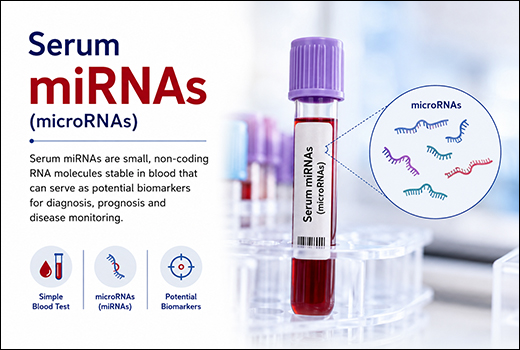
Serum microRNAs are small non-coding ribonucleic acids (18-25 nucleotides) quantified via blood draw using quantitative reverse transcription polymerase chain reaction or next-generation sequencing platforms, providing real-time snapshots of systemic gene regulation from distant tissues during controlled serum separation. This captures disease-specific signatures like oncomiRs in cancer, superior to protein markers alone for multi-pathway insights. This advanced liquid biopsy measures circulating microRNA profiles using high-throughput sequencers like Illumina, enabling panel-based assessment with normalization to stable references like miR-16.
Key Applications
- Diagnostic Accuracy: Panels achieve 80-96% sensitivity/specificity for early cancers vs. single markers; stable in circulation reduces variability.
- Safety Profile: Simple venipuncture; non-invasive; complication rate <0.1% (e.g., bruising).
- Efficiency: Results in hours/days; repeatable for monitoring without serial biopsies.
Procedure Overview (Key Steps)
Preparation Steps
- Sit comfortably and relax.
- Avoid hemolysis-inducing factors (e.g., vigorous mixing); fast if lipids interfere.
- Use EDTA tubes; process within 2 hours for optimal yield.
Test Performance Steps
- Collect 5-10 mL venous blood; allow clotting for serum.
- Centrifuge at 3000g for 10 min; harvest supernatant.
- Extract RNA via kits (e.g., miRNeasy); reverse transcribe with poly-A tailing.
- Amplify via qRT-PCR or sequence libraries, normalizing to cel-miR-39 spike-in.
- Analyze 2-3 replicates; software computes fold-changes vs. controls.
Post-Test
Profiles report as relative expression (ΔCt or RPM); no recovery time needed.
Clinical Indications
- Cancer diagnosis (e.g., lung panels miR-205/21); autoimmune monitoring (RA miR-146a).
- Therapy response (e.g., post-ICS in asthma); relapse risk stratification.
- Respiratory phenotyping (e.g., eosinophilic vs. neutrophilic); prognostic panels.
- Differentiating mimics (e.g., IPF vs. COPD); biologic candidacy.
Serum miRNA Report Reference Values and Interpretation
Serum miRNA reports use normalized fold-change compared to healthy controls for interpretation.
- Low/Negative (<1.5-fold change): No major dysregulation; high negative predictive value (85-90%).
- Intermediate (1.5-3-fold change): Needs clinical correlation; monitor trends.
- High/Positive (>3-fold up, e.g., miR-21): Indicates active disease with 80% prognostic value.
- Non-Diagnostic (hemolysis or poor yield): Repeat the sample and check quality.
Clinical Interpretation
- Negative Results –
Rules out active process (NPV >90%); pursue alternatives. Correlate with normal levels + imaging. - Atypical Results –
Indeterminate; repeat post-treatment. Risk~30%; integrate with proteins/eosinophils. - Positive Results –
Confirms pathology; initiates therapy. Persistent high → advanced intervention; track bi-monthly.
Ayurvedic View
In Ayurveda, dysregulated serum miRNAs reflect systemic imbalance as three dosha disorders involving circulatory toxins in circulatory fluids, similar to channel blockages in blood and respiratory pathways, manifesting as nodules or swelling in target tissues like lungs or joints.
Ayurvedic Pathophysiology
Altered miRNAs indicate toxin pathway blockages causing epigenetic changes, such as bronchial swelling in respiratory disorders or joint fluid accumulation in arthritis; chronic cases trigger Pitta aggravation leading to oxidative miRNA upregulation.
Management Principles
Mild purification therapies (therapeutic emesis-vaman, purgation-virechan, and nasal administration- nasya) based on disease strength and patient tolerance, combined with rejuvenation treatments to normalize miRNA levels as supportive care alongside biomarker-guided therapy.
Recommended Herbs
Key herbs promote toxin digestion, cleanse bodily channels, and modulate epigenetics to suppress harmful miRNAs for supportive disease control.
- Tulsi (Ocimum sanctum)
- Pippali (Piper longum)
- Haridra (Curcuma longa)
- Vasaka (Adhatoda vasica)
- Ashwagandha (Withania somnifera)
- Giloy (Tinospora cordifolia)
- Talispatra (Abies webbiana)
1. Tulsi (Ocimum sanctum)
Tulsi (Ocimum sanctum) leaves contain eugenol, a natural compound that calms inflammation and helps control harmful microRNAs like miR-21 and miR-155, which rise in diseases such as cancer or asthma. By blocking pathways that fuel swelling and cell overgrowth, Tulsi dissolves small inflammatory lumps in tissues and steadies gene activity linked to these microRNAs. Regular use of fresh leaf extracts or tea clears toxins from the bloodstream, supports lung and joint health, and brings serum microRNA levels back to normal. This improves test readings by reducing disease signals, aiding early detection and better management of respiratory or autoimmune issues.
2. Pippali (Piper longum)
Pippali (Piper longum) roots have piperine, which boosts digestion of toxins and clears blockages in body channels, helping balance microRNAs like miR-146a involved in ongoing inflammation. This compound reaches deep into lung and joint tissues, stopping excess immune cell movement that worsens swelling and raises abnormal microRNA levels. By breaking down sticky mucus and restoring normal gene control, Pippali strengthens airways and reduces disease markers in blood tests. Taking it as powder with honey daily enhances absorption, lowers elevated microRNAs, and optimizes serum readings for precise tracking of asthma or arthritis progress.
3. Haridra (Curcuma longa)
Haridra (Curcuma longa)’s main compound, curcumin, fights inflammation by activating pathways that lower harmful microRNAs such as miR-29b in swollen lungs or joints. It shrinks inflamed areas, clears waste from tissues, and boosts cleanup cells to remove debris, directly improving serum microRNA profiles. This herb widens passages in airways, eases pain, and stabilizes gene expression for better test results. Mix turmeric powder in warm water or use extracts daily to cut oxidative stress, normalize microRNA signals, and support recovery from chronic respiratory or joint conditions shown in blood analysis.
4. Vasaka (Adhatoda vasica)
Vasaka (Adhatoda vasica) leaves release vasicine, which relaxes tight muscles in airways and pushes out thick mucus, helping correct microRNAs like miR-126 that signal poor lung function. This action clears buildup in respiratory paths, reduces swelling from excess immune cells, and balances gene regulators in the blood. As an expectorant, it improves airflow and lowers inflammation markers, leading to healthier serum microRNA readings. Boil leaves for tea or take syrup form to expel toxins, enhance oxygen flow, and refine test outcomes for asthma or bronchitis monitoring.
5. Ashwagandha (Withania somnifera)
Ashwagandha (Withania somnifera) roots provide withaferin A, which calms overactive immune responses and reduces microRNAs like miR-21 tied to allergy-driven swelling in lungs or joints. It strengthens tissue resilience, clears inflammatory waste, and steadies gene activity to prevent chronic damage. This adaptogen lowers stress hormones that worsen microRNA imbalance, promoting stable blood levels for accurate tests.
6. Giloy (Tinospora cordifolia)
Giloy (Tinospora cordifolia) stems contain berberine, which cools fiery inflammation and targets microRNAs like miR-155 via energy-balancing pathways, dissolving lumps in lungs or joints. Its natural sugars strengthen immunity without overdrive, clearing fluid blockages and restoring normal gene signals in serum. This vine boosts overall detox, enhances oxygen use in tissues, and evens out microRNA readings for clearer disease tracking. Drink Giloy juice or decoction daily to quench radicals, fortify defenses, and optimize blood test results in chronic inflammation cases.
7. Talispatra (Abies webbiana)
Talispatra (Abies webbiana) needles offer alpha-pinene, which loosens thick mucus in airways and calms spasms, balancing microRNAs like miR-146a that drive excess secretion and swelling. It acts like a natural muscle relaxer for bronchi, clears obstructions, and soothes inflamed linings to normalize serum levels. This expectorant demulcent coats passages gently, reducing immune overreactions and refining microRNA profiles.
Conclusion
Serum miRNAs offer precision in disease phenotyping, achieving >85% accuracy via liquid biopsy panels. The seven herbs reverse dysregulation via targeted mechanisms: eugenol silences oncomiRs, piperine clears ama, curcumin activates AMPK, vasicine restores let-7, withaferin stabilizes immunity, berberine quenches miR-155, pinene balances inflammation. Pre-test protocols optimize profiles, post-use supports therapy tapering. This integrative model enhances diagnostics, reduces progression, synergizing Ayurvedic precision with modern biomarkers.